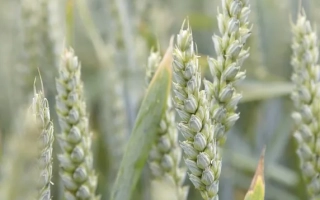
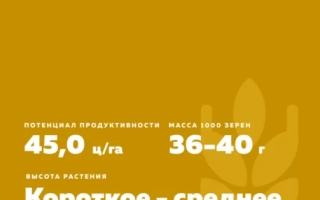
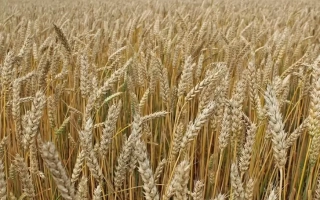
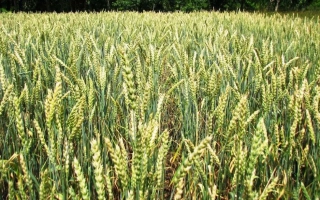
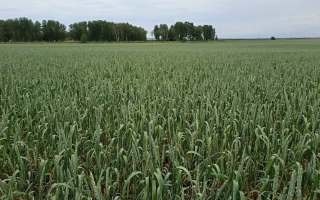
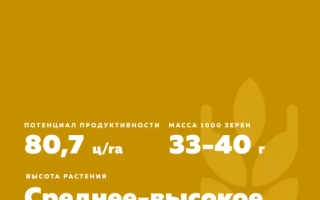
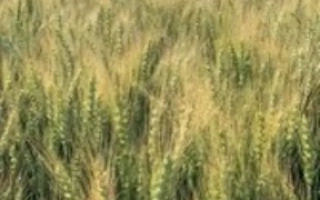
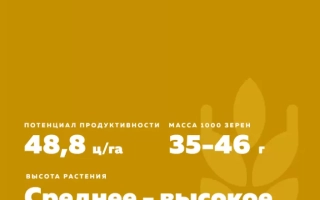
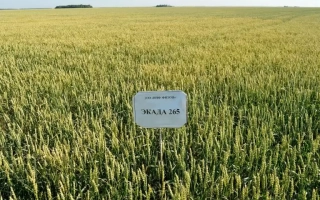
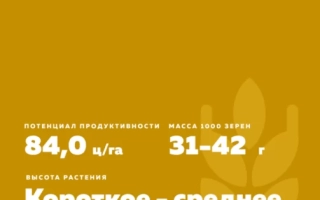
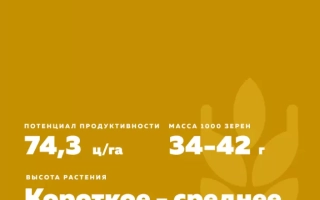
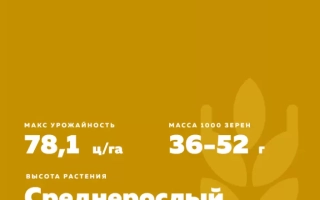
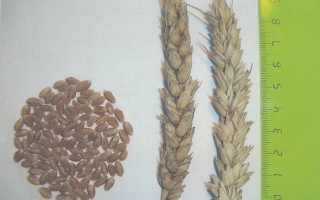
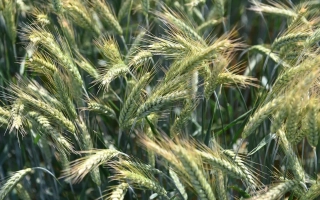
NOVOSIBIRSKAYA 75 is a variety of soft spring wheat (Triticum aestivum L.) of an early-maturing type with a vegetation period of 74–83 days. It belongs to the lutescens variety and is characterized by a medium-height plant with a semi-erect bush. The ear is pyramidal, white in color, of medium density or dense, with short awn-like appendages at the end. The grain is of medium size; the mass of 1000 grains varies from 33 to 40 grams, and the grain density is 754–778 g/l. The variety has a strong waxy coating on the ear, the upper internode of the straw, and the sheath of the flag leaf. NOVOSIBIRSKAYA 75 differs in high resistance to major diseases such as powdery mildew, brown rust, and powdery bunt, as well as resistance to drought and lodging. Under field conditions, powdery mildew and brown rust affect the variety weakly, although moderate susceptibility to root rots is noted. The variety is also resistant to shedding and germination of grain on the root, which increases its technologicality during cultivation. The straw is weakly developed, which contributes to resistance to lodging. In terms of grain quality, NOVOSIBIRSKAYA 75 has a gluten content of about 27% and raw protein of approximately 14%, which ensures good and excellent bread-making properties. The yield of the variety over the years of testing averages 3.5 t/ha, with maximum indicators up to 6.3 t/ha. It is recommended for cultivation in the Novosibirsk region, Altai Krai, and the Northern forest-steppe of the Novosibirsk region, where it demonstrates stable productivity and adaptability to local climatic conditions.