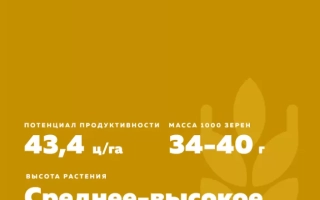
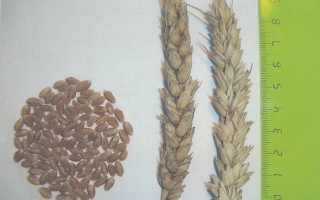
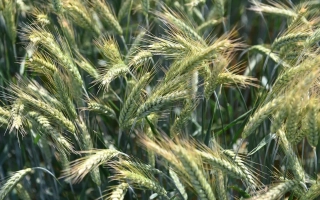
DAGANSKAYA is a medium-soft spring wheat (Triticum aestivum L.) variety characterized by medium ripening and medium plant height. This variety is distinguished by good resistance to lodging, shattering, as well as sprouting in the field and in windrows, ensuring crop preservation. The mass of 1000 grains is 33-38 g, grain natural density is 782 g, indicating high grain quality. Raw gluten content ranges from 31 to 33%, and protein content averages 14.7%, providing excellent baking qualities. Gluten content reaches 34-35%, positively affecting flour technological properties.
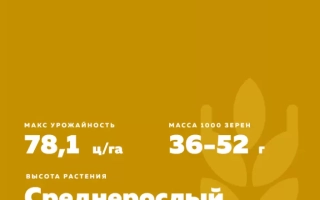
The variety is recommended for cultivation in various regions of Russia, including Bryansk, Vladimir, Ivanovo, Kaluga, Tulsk, Kursk, and Oryol regions, as well as West Siberia, East Siberia, and the Far East regions. Average yield in the Central and Central Black Earth regions is 30-35 centners/hectare, in permitted regions about 24.7 centners/hectare. Despite high productivity, the variety is susceptible to certain diseases such as hard smut, septoria, root rots, and is highly susceptible to brown rust and powdery mildew.
DAGANSKAYA is widely used for producing wheat flour, semolina, and bran. Grain meets high quality standards, including moisture not exceeding 13.5%, weed impurity not exceeding 1%, grain impurity up to 5%, and damage by bean bug up to 2%. These indicators ensure high-quality raw materials for the food industry and favorable conditions for purchases.