

SKU #46171
·
45 views
Zolotovoritska
Pear
User rating
0 votes0% positive reviews
No ratings yet — be the first.
Ripening Period
Winter
Fetal Size
Large (180–250 g)
Fruit Color
Green, Yellow-Green
Flavor
Sour-sweet, Scented
Store offers · 3 from 3 stores
Prices are updated on loadLoading offers…
Available at: Грінмарт · Idea-Sad · Квіти Буковини · Литинсад · Megasad · Sadco
Aggregator catalog: prices are collected automatically from store websites, normalized by AI and converted at the current exchange rate. Before ordering, confirm the price and availability on the store's website. This block is not indexed by search engines — the data is loaded after the page opens.
About product

Zolotovorotska pear is an early-winter maturing variety developed at the Lviv Experimental Station of Horticulture by crossing the varieties Parisanka and Olivier de Serr. The tree is medium-sized with an inverted pyramid-shaped, dense crown, prone to overcrowding and branches that tend to droop toward the ground. Leaves are elongated oval in shape and have a muted green color, arranged spirally o…
Ripening Period
Winter
Fetal Size
Large (180–250 g)
Fruit Color
Green, Yellow-Green
Flavor
Sour-sweet, Scented
Description
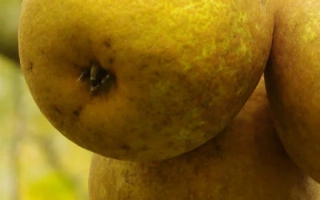
Zolotovorotska pear is an early-winter maturing variety developed at the Lviv Experimental Station of Horticulture by crossing the varieties Parisanka and Olivier de Serr. The tree is medium-sized with an inverted pyramid-shaped, dense crown, prone to overcrowding and branches that tend to droop toward the ground. Leaves are elongated oval in shape and have a muted green color, arranged spirally on the branches. The variety is distinguished by high winter hardiness, resistance to fungal and bacterial diseases, and regular, stable fruiting beginning from the 3rd to 5th year after planting. Fruits of the Zolotovorotska pear are large, weighing 230–350 grams, bergamot-shaped with a dense, dry, light-green skin that turns golden-yellow or yellowish-brown at consumer maturity, featuring characteristic large russet spots. The flesh is juicy, oily, smooth, with a tangy-sweet flavor and a delicate almond aroma. Harvest usually occurs in early October, while consumer maturity arrives in November. Due to its dense skin and good storability, the fruit can be stored under refrigerated conditions until April. For successful cultivation, trees are best planted on lowland sites with good soil moisture, preferably on southern, south-western, and south-eastern slopes where spring moisture is retained. The root system lacks skeletal roots, making the pear sensitive to water deficiency and requiring regular watering, preferably in the early morning or late evening to avoid scorching. The variety is self-fertile, but cross-pollination with varieties such as Parisanka, Conference, and Lazurnaya significantly increases yield and fruit quality.
Crop & resistance
Crop
Disease resistance
Specifications hover over for a hint about the specification
|
Ripening Period
Ripening Period
It takes 70-100 days until pepper reaches flowering stage, 130-160 days until technical fruit ripeness, and 135-180 days until physiological ripeness. |
Winter |
|---|---|
| Fetal Size | Large (180–250 g) |
|
Fruit Color
Fruit Color
The fruit color of tomato varieties is influenced by the combination of skin and flesh color. Some varieties have transparent skin, others — yellow. When combined differently, the fruits can acquire quite diverse colors. The fruit color is affected by pigments (lycopene) and thei... |
|
| Flavor | |
| Meat Texture Consistency | |
| Laziness | |
| Height and shape of the tree | |
| Assignment | |
| Features | |
| Registration year | 1995 |
| Catalog | Catalog → Pear |
| Legal data |
Show · 1
|
| Country | Ukraine |
Not yet комментариев. Be the first!
Alternatives
Pear saplings · similar varieties


See also
Often considered together with this variety




Recently viewed
Products you’ve viewed on this site
Reviews · 0