

SKU #64291
·
44 views
Pea SALAVAT
Pea
Prices in stores
No offers yet — stores have not added prices for this product yet.
Similar varieties with prices
- Kumir from 0.38 €
-
 Fregat
from 34.24 €за л
Fregat
from 34.24 €за л
-
 MadonnaNPZ Lembke
from 0.41 €per 1 kg
MadonnaNPZ Lembke
from 0.41 €per 1 kg
-
 Tsarevich
from 0.94 €per 1 kg
Tsarevich
from 0.94 €per 1 kg
Production Direction
For grain
Plant Type
Semi-leafless
Growing Season
70-80 days
Plant: height
Average Height
Your mark
0 votes
0% positive ratings
Description
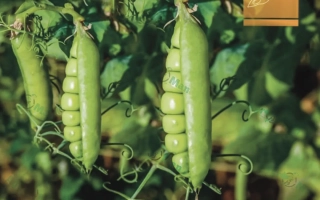
The cultivated pea variety Salavats is a leafless mid-season variety with a vegetative period ranging from 58 to 85 days. Plants have an average height of 46 to 69 cm and a medium-length stem. A distinguishing feature of the variety is the large number of nodes up to the first fertile node, well-developed stipules, and medium density of mottling. Flowering occurs in medium terms, with up to two flowers forming on each node. Pods are slightly curved with a blunt tip, seeds are round-shaped, large and uniform, with yellow cotyledons and a light hilum. The mass of 1000 seeds varies from 174 to 275 grams, and protein content reaches 23%. The Salavats variety is characterized by high resistance to lodging and shattering, as well as enhanced drought resistance, making it a reliable choice for cultivation in various climatic conditions. It is moderately resistant to ascochitis but susceptible to root rots. The yield of the variety is at the level of average standards and varies depending on the region of cultivation: in the Central region it is about 23.8 c/ha, in the Volga-Vyatka region — 24.6 c/ha, in the Middle Volga region — 18.8 c/ha, in the Urals — 18.2 c/ha. The maximum registered yield reached 42.0 c/ha in the Republic of Bashkortostan. The variety is recommended for cultivation in several regions and republics of Russia, including Vladimir, Ivanovo, Kaluga, Moscow, Orenburg, Penza, Smolensk, Tula, and Ulyanovsk regions, as well as the Republics of Bashkortostan, Mari El, Mordovia, Tatarstan, and Udmurtia. Cultivated peas are an important grain legume crop, widely used both in the food industry and in feed production. The plant prefers a moderate climate, an optimal germination temperature of 18-25° C, and well-drained loamy soils with a neutral or slightly acidic reaction. The critical period for the plant is the phases of generative organ formation and flowering, when sufficient soil moisture is especially important. Pea grain of the Salavats variety is used for the production of groats, flour, frozen peas, as well as in compound feed industry. High protein content makes this variety valuable for both food and feed purposes.
Crop & resistance
Crop
Disease resistance
Specifications
| Production Direction | |
|---|---|
| Plant Type | |
| Growing Season | 70-80 days |
| Plant: height | Average Height |
| Beans | |
| Weight per 1000 seeds | 180-200 grams, 200-220 grams, 220-240 grams, 240-260 grams, 260-280 grams |
| Protein Content | 22-24% |
| Registration year | 2023 |
| Catalog | Catalog → Pea |
| Legal data |
Show · 6
|
| Country | Russia |
No reviews yet. Be the first to share your experience.





See also
Often considered together with this variety


Recently viewed
Products you’ve viewed on this site
Reviews