


SKU #74587
·
57 views
PROFI
Paulownia
Paulownia Professional S.L.User rating
0 votes0% positive reviews
No ratings yet — be the first.
Decorative Plants
Pavlovnia
Apply
Decorative landscaping, Honey plant
Registration year
2024
Store offers · 1 from 1 stores
Prices are updated on loadLoading offers…
Available at: Сади Буковини
Aggregator catalog: prices are collected automatically from store websites, normalized by AI and converted at the current exchange rate. Before ordering, confirm the price and availability on the store's website. This block is not indexed by search engines — the data is loaded after the page opens.
About product

The perfect combination of elite ornamental value and high productivity for professional apiarists.
Decorative Plants
Pavlovnia
Apply
Decorative landscaping, Honey plant
Registration year
2024
Description
Spanish Selection for Aesthetics and Apiculture
The «Profi» hybrid by Paulownia Professional S.L. is the result of highly specialized breeding focused on creating high-performance ornamental plantings. Developed by originator Artur Leonidovich Rudenko, this hybrid has been refined to offer exceptional adaptability to European climate conditions.
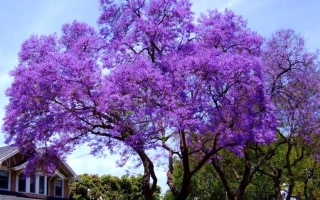
The primary distinction between «Profi» and standard industrial Paulownia varieties lies in its crown architecture and blooming intensity. While most commercial varieties focus exclusively on timber growth rates, «Profi» prioritizes aesthetic appearance and productivity for beekeeping.
Key Advantages of the Hybrid
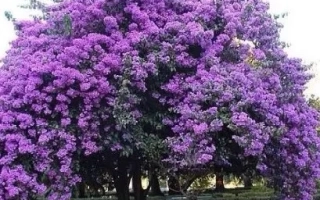
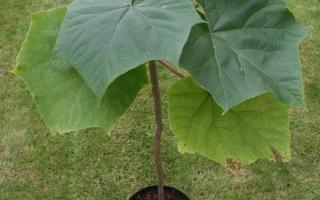
- Ornamental Potential: The variety develops a symmetrical, lush crown with large leaves, making it a premium choice for landscape design in parks, private estates, and avenues.
- Honey Production: The flowering period is characterized by abundant nectar secretion, transforming fields of «Profi» into high-yield bases for commercial apiaries.
- Quality Assurance: Paulownia Professional S.L. maintains strict control over genetic purity, ensuring that every plant meets the advertised growth and resilience specifications.
Who Is This Solution For?
«Profi» is the ideal choice for landowners looking to balance form and function. It is not intended as a "technical" wood-production Paulownia, but rather as a high-tech solution for those seeking a fast-growing landscape element that generates tangible economic value through honey production.
While planting requires attention to soil moisture during the initial rooting phase—typical for the genus—the hybrid exhibits significant drought tolerance thereafter, a hallmark of Paulownia Professional S.L.'s breeding program.
Specifications
| Decorative Plants | |
|---|---|
| Apply | |
| Registration year | 2024 |
| Catalog | Catalog → Paulownia |
| Manufacturer | Paulownia Professional S.L. |
| Legal data |
Show · 1
|
| Country | Spain |
Not yet комментариев. Be the first!


See also
Often considered together with this variety




Recently viewed
Products you’ve viewed on this site
Reviews · 0