


SKU #74590
·
64 views
Phoenix
Paulownia
VNISUser rating
0 votes0% positive reviews
No ratings yet — be the first.
Decorative Plants
Pavlovnia
Apply
Wood
Registration year
2020
Prices in stores
from0.02 €per plant
pack from 1.74 € per 1 l
2 offers from 2 stores
Store offers · 2 from 2 stores
Prices are updated on loadLoading offers…
Available at: Батьків Сад · Berry Farm · Кліома Сервіс
Aggregator catalog: prices are collected automatically from store websites, normalized by AI and converted at the current exchange rate. Before ordering, confirm the price and availability on the store's website. This block is not indexed by search engines — the data is loaded after the page opens.
About product

A high-growth, cold-hardy Paulownia hybrid from VNIS designed for industrial timber production and aesthetic landscaping.
Decorative Plants
Pavlovnia
Apply
Wood
Registration year
2020
Description
Paulownia 'Phoenix': Ukrainian Selection for Industrial and Landscape Use
The 'Phoenix' hybrid, developed by the All-Ukrainian Scientific Institute of Selection (VNIS), represents a breakthrough in adapting southern cultivars to the climatic challenges of Ukraine. Unlike many imported varieties that struggle with severe frosts, 'Phoenix' exhibits improved cold hardiness, making it a reliable choice for commercial forestry projects.
Economic Potential and Timber Quality
The core advantage of 'Phoenix' is its exceptional growth rate. The timber produced by this hybrid is highly valued in industries ranging from furniture manufacturing to aerospace and high-quality biofuel production due to its low density, high strength, and resistance to warping. Thanks to the meticulous work of originators Andrii Solomenko, Iaroslav Parii, and Myroslav Parii, planting 'Phoenix' allows for a shortened harvest cycle, providing faster return on investment compared to traditional hardwood species.
Decorative Features
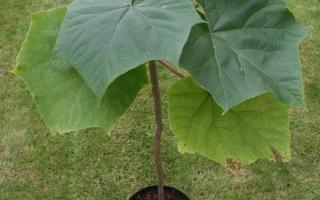
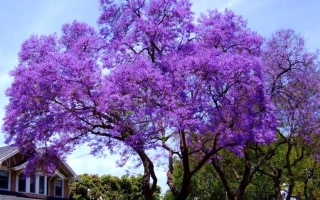
Beyond its industrial utility, 'Phoenix' serves as an impressive landscaping element. Its large, heart-shaped leaves and lush floral display make it a standout choice for urban greening. It is particularly effective for:
- Rapid establishment of "green buffers" and privacy screens;
- Low-maintenance public park development;
- Residential landscaping where both fast growth and visual impact are required.
Who is this hybrid for? 'Phoenix' is the optimal solution for agricultural entrepreneurs planning high-yield timber plantations, as well as landscape designers looking for a robust, fast-growing ornamental tree capable of thriving in varied temperate conditions.
Specifications
| Decorative Plants | |
|---|---|
| Apply | |
| Registration year | 2020 |
| Catalog | Catalog → Paulownia |
| Manufacturer | VNIS |
| Legal data | |
| Country | Ukraine |
Not yet комментариев. Be the first!




See also
Often considered together with this variety





Recently viewed
Products you’ve viewed on this site
Reviews · 0