


SKU #73712
·
71 views
PHOENIX PAEULOWIA
Paulownia
WEGROW GERMANY GMBHUser rating
0 votes0% positive reviews
No ratings yet — be the first.
Decorative Plants
Pavlovnia
Height of mature tree
10-15, 12-18, 15-20
Apply
Wood, Honey plant, Decorative landscaping
Registration year
2023
Prices in stores
from0.02 €per plant
pack from 1.94 € per 100 pcs
1 offer from 1 store
Store offers · 1 from 1 stores
Prices are updated on loadLoading offers…
Available at: Berry Farm · Кліома Сервіс
Aggregator catalog: prices are collected automatically from store websites, normalized by AI and converted at the current exchange rate. Before ordering, confirm the price and availability on the store's website. This block is not indexed by search engines — the data is loaded after the page opens.
About product

A fast-growing German Paulownia hybrid engineered for high-quality commercial timber and landscaping.
Decorative Plants
Pavlovnia
Height of mature tree
10-15, 12-18, 15-20
Apply
Wood, Honey plant, Decorative landscaping
Registration year
2023
Description
Why choose «Phoenix ONE» for industrial plantations?
In the industrial Paulownia market, the German breeding standards set by Wegrow Germany stand out for their rigorous quality control. The «Phoenix ONE» hybrid is the result of years of genetic stabilization, specifically developed to produce high-quality commercial timber within short timeframes.
Unlike wild varieties, this hybrid offers predictable growth patterns. Depending on regional climate conditions and the intensity of agricultural practices, mature trees reach heights between 10 and 20 meters. This variability is a key adaptation feature: in fertile soils with consistent irrigation, the tree maximizes its biomass accumulation, hitting the upper height targets.
Key Benefits and Applications
- Commercial Timber: The primary value of «Phoenix ONE» is its rapid rotation cycle. The straightness and structural homogeneity of the wood make it ideal for the furniture industry, veneer production, and musical instruments.
- Efficient Honey Source: During the flowering season, the plant produces a significant amount of nectar, providing a valuable secondary income stream for apiarists.
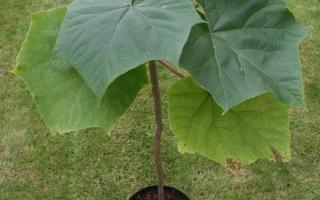
- Landscape Gardening: Featuring large, lush leaves and stunning blooms, the variety is widely used for rapid landscaping, creating living privacy screens or shaded recreational areas.
Who should consider «Phoenix ONE»? Primarily, landowners seeking a stable long-term investment. While the hybrid requires high-quality soil and proper irrigation during its initial growth phases, following the Wegrow Germany cultivation protocols ensures one of the fastest capital growth rates in the agricultural sector.
Specifications
| Decorative Plants | |
|---|---|
| Height of mature tree | 10-15, 12-18, 15-20 |
| Apply | |
| Registration year | 2023 |
| Catalog | Catalog → Paulownia |
| Manufacturer | WEGROW GERMANY GMBH |
| Country | Germany |
Not yet комментариев. Be the first!




See also
Often considered together with this variety









Recently viewed
Products you’ve viewed on this site
Reviews · 0