


SKU #68741
·
29 views
Golden
Millet
Federal Agrarian Scientific Center of the South-EastUser rating
0 votes0% positive reviews
No ratings yet — be the first.
Type of Sort
Sort
Resistance to lodging
High
Registration year
2001
Prices in stores
from0.54 €per 1 kg
pack from 42.61 € per pack
2 offers from 2 stores
Store offers · 2 from 2 stores
Prices are updated on loadLoading offers…
Available at: Agrofon · Агропошта
Aggregator catalog: prices are collected automatically from store websites, normalized by AI and converted at the current exchange rate. Before ordering, confirm the price and availability on the store's website. This block is not indexed by search engines — the data is loaded after the page opens.
About product

A reliable millet variety with high lodging resistance from the FANTS Yugo-Vostoka breeders.
Type of Sort
Sort
Resistance to lodging
High
Registration year
2001
Description
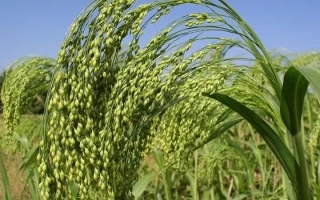
Stable yields: «Zolotistoye» millet variety
For many years, the breeding work of FANTS Yugo-Vostoka has been a benchmark for adaptive selection in arid regions. The «Zolotistoye» millet variety is the result of in-depth scientific research aimed at solving the primary challenge of steppe farming: harvest instability caused by climate fluctuations. The originator and patent holder is the FGBNU Federal Agricultural Research Center of the South-East, ensuring the purity of the genetic material and strict compliance with stated characteristics.
Agronomic advantages
A key feature of this variety is its high resistance to lodging. In intensive farming systems, where excessive fertilizer application or strong wind gusts can lead to significant grain loss, «Zolotistoye» maintains a vertical stem position until harvest. This minimizes losses during combine harvesting and allows for collection within optimal agrotechnical timeframes.
- Crop type: Millet.
- Application: Commercial production of high-quality grain.
- Resistance: High adaptability to stress factors, including excellent lodging resistance.
«Zolotistoye» from FANTS Yugo-Vostoka has established itself as a reliable choice for farmers focused on consistent yields in risky farming environments. An important characteristic is its comprehensive phytosanitary resistance; breeders have paid special attention to the variety's resistance to common pathogens, which helps to reduce the fungicidal load on crops.
When choosing this variety, agronomists prioritize predictability. The high grain filling indices and excellent commercial quality make «Zolotistoye» a sought-after raw material both for the processing industry and for creating a stable feed base. The traditions of the research school incorporated into this variety continue to serve as a foundation for profitable millet cultivation.
Video · 1 video
Suggest a video →Crop & resistance
Disease resistance
Specifications
| Type of Sort | |
|---|---|
| Resistance to lodging | |
| Registration year | 2001 |
| Catalog | Catalog → Millet |
| Manufacturer | Federal Agrarian Scientific Center of the South-East |
| Legal data |
Show · 7
|
| Country | Russia |
Not yet комментариев. Be the first!



See also
Often considered together with this variety





Recently viewed
Products you’ve viewed on this site
Reviews · 0