


SKU #68583
·
52 views
VEGA 87
Lucerne
User rating
0 votes0% positive reviews
No ratings yet — be the first.
Plant Height
85-110
Registration year
1988
About product

VEGA 87 — a cultivar of variable medick lucerne of the variegated hybrid type, characterized by medium-early maturity and a short flowering period. Bushes are erect with medium density and uniform foliage coverage reaching 48-60%. Leaves are elliptical with weak pubescence, flowers are variegated, and seeds are kidney-shaped, yellow-violet in color, with a mass of 2.2-2.4 g per 1000 seeds. The veg…
Plant Height
85-110
Registration year
1988
Description
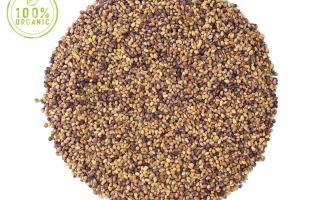
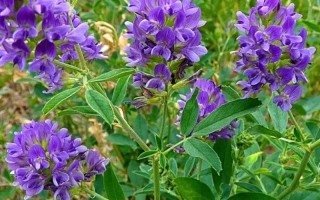
VEGA 87 — a cultivar of variable medick lucerne of the variegated hybrid type, characterized by medium-early maturity and a short flowering period. Bushes are erect with medium density and uniform foliage coverage reaching 48-60%. Leaves are elliptical with weak pubescence, flowers are variegated, and seeds are kidney-shaped, yellow-violet in color, with a mass of 2.2-2.4 g per 1000 seeds. The vegetative period from the beginning of spring vegetation to the first mowing is 50-55 days, and to seed maturity is 120-130 days.
The cultivar is distinguished by high winter hardiness and resistance to lodging, root rots, and most diseases, as well as having above-average drought resistance. Dry matter yield reaches 10-11 tons per hectare, and seed yield ranges from 250-300 kg in the Non-Black Earth Zone to 800 kg in forest-steppe and steppe zones. At the budding phase, 1 kg of dry matter contains 0.85-0.88 feed units and 167-180 g of digestible protein, making the cultivar a highly nutritious feed.
VEGA 87 is widely used as a fodder, nectar-producing, and green manure crop. It enriches the soil with organic matter, nitrogen, and potassium, improving soil structure and reducing acidity. Lucerne is a good predecessor for many agricultural crops, is resistant to nematodes and pests. The recommended sowing rate is 0.4-0.5 kg per 100 m², which ensures intensive regrowth in spring and after mowing, allowing up to three cuts per season.
The cultivar is distinguished by high winter hardiness and resistance to lodging, root rots, and most diseases, as well as having above-average drought resistance. Dry matter yield reaches 10-11 tons per hectare, and seed yield ranges from 250-300 kg in the Non-Black Earth Zone to 800 kg in forest-steppe and steppe zones. At the budding phase, 1 kg of dry matter contains 0.85-0.88 feed units and 167-180 g of digestible protein, making the cultivar a highly nutritious feed.
VEGA 87 is widely used as a fodder, nectar-producing, and green manure crop. It enriches the soil with organic matter, nitrogen, and potassium, improving soil structure and reducing acidity. Lucerne is a good predecessor for many agricultural crops, is resistant to nematodes and pests. The recommended sowing rate is 0.4-0.5 kg per 100 m², which ensures intensive regrowth in spring and after mowing, allowing up to three cuts per season.
Video · 2 videos
Suggest a video →Crop & resistance
Crop
Disease resistance
Pest resistance
Specifications
| Plant Height | 85-110 |
|---|---|
| Registration year | 1988 |
| Catalog | Catalog → Lucerne |
| Legal data |
Show · 2
|
| Country | Russia |
Store offers
Prices are updated on loadLoading offers…
Aggregator catalog: prices are collected automatically from store websites, normalized by AI and converted at the current exchange rate. Before ordering, confirm the price and availability on the store's website. This block is not indexed by search engines — the data is loaded after the page opens.
Not yet комментариев. Be the first!
Alternatives
Alfalfa seeds · similar varieties




See also
Often considered together with this variety





GORODETSKAYA
ФГБОУ ВО Нижегородская государственная сельскохозяйственная академия
060 1 offer
2.21 €per 1 kg ≈ 114 ₴


Recently viewed
Products you’ve viewed on this site
Reviews · 0