


SKU #45826
·
63 views
Alfalfa Vira
Lucerne
User rating
0 votes0% positive reviews
No ratings yet — be the first.
Plant Height
100
Registration year
1999
Prices in stores
from3.88 €per 1 kg
pack from 3.88 € per 1 kg
6 offers from 5 stores
Store offers · 6 from 5 stores
Prices are updated on loadLoading offers…
Available at: Агропошта · Епіцентр К · Khaskom · Medoprom · Prom-agro · СоюзАгро
Aggregator catalog: prices are collected automatically from store websites, normalized by AI and converted at the current exchange rate. Before ordering, confirm the price and availability on the store's website. This block is not indexed by search engines — the data is loaded after the page opens.
About product

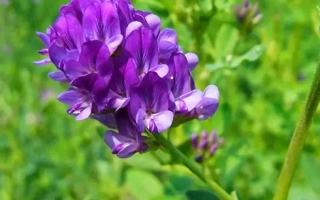
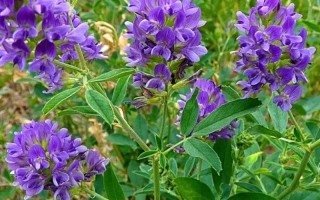
Lucerne variety "Vira" is a tall plant, included in the State Register of Plant Varieties of Ukraine since 1999 and recommended for cultivation in Steppe and Forest-Steppe zones. This variety belongs to the variable, blue-hybrid group of lucerne, characterized by round, sturdy stems up to 100 cm tall and trifoliate leaves with rounded or oblong-oval leaflets. The flowers have a blue-violet corolla…
Plant Height
100
Registration year
1999
Description
Lucerne variety "Vira" is a tall plant, included in the State Register of Plant Varieties of Ukraine since 1999 and recommended for cultivation in Steppe and Forest-Steppe zones. This variety belongs to the variable, blue-hybrid group of lucerne, characterized by round, sturdy stems up to 100 cm tall and trifoliate leaves with rounded or oblong-oval leaflets. The flowers have a blue-violet corolla and a unique feature — self-pollination. The root system is taprooted, and inflorescences are racemose. The variety is characterized by vigorous spring growth and regrowth after mowing, as well as resistance to lodging due to strong stems. The yield of green mass reaches 558 centners per hectare, and seed yield — 4.1 centners per hectare.
Lucerne "Vira" is widely used in agriculture for animal feeding, thanks to its high protein content in the forage — about 20%, which is a record level among plants growing in Ukraine. Additionally, it is a honey plant, attracting bees during flowering. The variety tolerates major diseases, including root rots, enhancing its reliability and productivity.
For sowing lucerne "Vira," it is recommended to use prepared soil, sowing seeds at a depth of 2-3 cm followed by harrowing. In spring, at a temperature of 18-20°C, seeds are sown at a rate of 16-18 kg/ha in moist regions and 14-16 kg/ha in dry regions. When sown in grass mixtures, the rate is reduced to 8-10 kg/ha. Harrowing is not recommended after emergence. Due to its agronomic characteristics, lucerne allows for multiple cuttings per year, making it a profitable and efficient forage crop.
Lucerne "Vira" is widely used in agriculture for animal feeding, thanks to its high protein content in the forage — about 20%, which is a record level among plants growing in Ukraine. Additionally, it is a honey plant, attracting bees during flowering. The variety tolerates major diseases, including root rots, enhancing its reliability and productivity.
For sowing lucerne "Vira," it is recommended to use prepared soil, sowing seeds at a depth of 2-3 cm followed by harrowing. In spring, at a temperature of 18-20°C, seeds are sown at a rate of 16-18 kg/ha in moist regions and 14-16 kg/ha in dry regions. When sown in grass mixtures, the rate is reduced to 8-10 kg/ha. Harrowing is not recommended after emergence. Due to its agronomic characteristics, lucerne allows for multiple cuttings per year, making it a profitable and efficient forage crop.
Crop & resistance
Crop
Specifications
| Plant Height | 100 |
|---|---|
| Registration year | 1999 |
| Catalog | Catalog → Lucerne |
| Legal data |
Show · 1
|
| Country | Ukraine |
Not yet комментариев. Be the first!
Alternatives
Alfalfa seeds · similar varieties






See also
Often considered together with this variety





Recently viewed
Products you’ve viewed on this site
Reviews · 0