


SKU #68639
·
54 views
KRASNODAR EARLY
Lucerne
User rating
0 votes0% positive reviews
No ratings yet — be the first.
Plant Height
70-90
Registration year
1974
Prices in stores
from11.08 €per 1 kg
pack from 5.54 € per 0.5 kg
1 offer from 1 store
Store offers · 1 from 1 stores
Prices are updated on loadLoading offers…
Available at: Zelensvit
Aggregator catalog: prices are collected automatically from store websites, normalized by AI and converted at the current exchange rate. Before ordering, confirm the price and availability on the store's website. This block is not indexed by search engines — the data is loaded after the page opens.
About product

Krasnodar Early Lucerne is a variety of blue lucerne (Medicago sativa L. subsp. sativa) belonging to the legume family. It was registered in 1968 and included in the State Register in 1974. The variety is adapted for cultivation in various regions of the North Caucasus and southern Russia, including the republics of Adygea, Dagestan, Ingushetia, Kabardino-Balkaria, Karachay-Cherkessia, Crimea, Nor…
Plant Height
70-90
Registration year
1974
Description
Krasnodar Early Lucerne is a variety of blue lucerne (Medicago sativa L. subsp. sativa) belonging to the legume family. It was registered in 1968 and included in the State Register in 1974. The variety is adapted for cultivation in various regions of the North Caucasus and southern Russia, including the republics of Adygea, Dagestan, Ingushetia, Kabardino-Balkaria, Karachay-Cherkessia, Crimea, North Ossetia-Alania, Chechnya, as well as Rostov Oblast and the Stavropol Krai. The breeder of the variety is FGBNU "National Grain Center named after P.P. Lukyanenko".
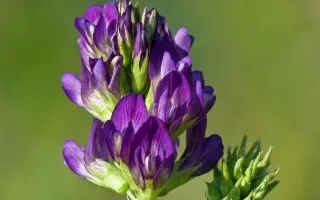
Krasnodar Early Lucerne is a perennial plant with large leafy stems and leaves, as well as inflorescences, the color of which varies from light blue to dark purple. The variety is characterized by a medium growth rate and high productivity, making it in demand in livestock feed production. In Krasnodar Krai, lucerne occupies significant sown areas, where 3-4 cuts of green mass are obtained per season. Part of the crops are left for seeds, which ensures reproduction and further use of the variety.
In addition to its feed value, Krasnodar Early Lucerne is a good nectar plant. Thanks to repeated mowing, a nectar conveyor is created, which allows using the plant as a supplementary and main source of nectar for bees in different flowering periods. In favorable years, up to 200 kg of honey can be harvested from one hectare. Studies show that about 1% of bees in the hive are able to open lucerne flowers, which promotes effective pollination and increased yield.
Krasnodar Early Lucerne is a perennial plant with large leafy stems and leaves, as well as inflorescences, the color of which varies from light blue to dark purple. The variety is characterized by a medium growth rate and high productivity, making it in demand in livestock feed production. In Krasnodar Krai, lucerne occupies significant sown areas, where 3-4 cuts of green mass are obtained per season. Part of the crops are left for seeds, which ensures reproduction and further use of the variety.
In addition to its feed value, Krasnodar Early Lucerne is a good nectar plant. Thanks to repeated mowing, a nectar conveyor is created, which allows using the plant as a supplementary and main source of nectar for bees in different flowering periods. In favorable years, up to 200 kg of honey can be harvested from one hectare. Studies show that about 1% of bees in the hive are able to open lucerne flowers, which promotes effective pollination and increased yield.
Crop & resistance
Crop
Specifications
| Plant Height | 70-90 |
|---|---|
| Registration year | 1974 |
| Catalog | Catalog → Lucerne |
| Legal data |
Show · 1 |
| Country | Russia |
Not yet комментариев. Be the first!
See also
Often considered together with this variety


Recently viewed
Products you’ve viewed on this site
Reviews · 0