


SKU #71281
·
51 views
RAFKAT
Hippeastrum
User rating
0 votes0% positive reviews
No ratings yet — be the first.
Plant Height
40-50 cm, 50-60 cm, 60-70 cm, 70-80 cm
Flower diameter, cm
15-18 cm, 18-22 cm, 22-25 cm
Registration year
2017
About product

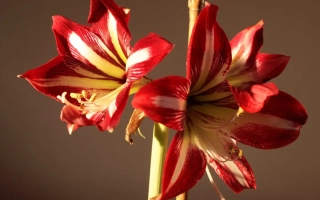
A Russian hybrid with manageable habitus and impressive flower sizes up to 25 cm.
Plant Height
40-50 cm, 50-60 cm, 60-70 cm, 70-80 cm
Flower diameter, cm
15-18 cm, 18-22 cm, 22-25 cm
Registration year
2017
Description
Engineering approach to breeding: Rafkat morphotype
The 'Rafkat' Hippeastrum is the result of targeted breeding efforts by the Ufa Federal Research Center of the RAS. Unlike mass-produced Dutch hybrids, the focus here is on the adaptive plasticity of the flower stalk and the geometry of the perianth.
Stalk architecture and habitus
A critical component of this cultivar is its variable growth. The biological potential of 'Rafkat' allows for flower stalks ranging from 40 to 80 cm. This height amplitude is the result of calibrating varietal genetics to different light and nutrient conditions. In practice, this gives growers the ability to manage forcing: under intensive light, the plant maintains compactness (40-50 cm), while with reduced insolation, it elongates the stalk while maintaining resistance to lodging due to a thickened stem.
Generative organ parameters
Flower diameter is a key commercial indicator. The 'Rafkat' line covers a range of 15 to 25 cm. Technically, this is achieved through petal density and high turgor stability of the epidermal cells. During the vegetation period, the following should be considered:
- At maximum aperture (22-25 cm), the flower requires strict temperature control to prevent premature wilting.
- The medium range (18-22 cm) is optimal for commercial cutting, ensuring the best balance between decorative appeal and transportability.
This development by the UFRC RAS is oriented toward professional floriculture, where predictability of the bulb development cycle and line purity are crucial, preventing the degradation of varietal traits in subsequent generations.
Specifications
| Plant Height | 40-50 cm, 50-60 cm, 60-70 cm, 70-80 cm |
|---|---|
| Flower diameter, cm | 15-18 cm, 18-22 cm, 22-25 cm |
| Registration year | 2017 |
| Catalog | Catalog → Hippeastrum |
| Legal data |
Show · 2
|
| Country | Russia |
Store offers
Prices are updated on loadLoading offers…
Aggregator catalog: prices are collected automatically from store websites, normalized by AI and converted at the current exchange rate. Before ordering, confirm the price and availability on the store's website. This block is not indexed by search engines — the data is loaded after the page opens.
Not yet комментариев. Be the first!
Alternatives
Hippeastrum · similar varieties




See also
Often considered together with this variety


Recently viewed
Products you’ve viewed on this site
Reviews · 0