


SKU #70534
·
72 views
Caucasus
Hazelnut
User rating
0 votes0% positive reviews
No ratings yet — be the first.
Nut; Shape
Round
Nut; Fruit mass
1.5-2.0 grams
Registration year
1999
Store offers · 1 from 1 stores
Prices are updated on loadLoading offers…
Available at: Экосад
Aggregator catalog: prices are collected automatically from store websites, normalized by AI and converted at the current exchange rate. Before ordering, confirm the price and availability on the store's website. This block is not indexed by search engines — the data is loaded after the page opens.
About product

Filbert «Caucasus» – a mid-season variety developed in 1980 on the Black Sea coast of the Krasnodar region and included in the state register since 1999. It is distinguished by a vigorous bush up to 4 m in height and 3.5–4.5 m in diameter, with an oval crown of medium density and branches diverging at a right angle from the trunk. The trunk bark has a greenish-gray hue, while the shoots are of med…
Nut; Shape
Round
Nut; Fruit mass
1.5-2.0 grams
Registration year
1999
Description
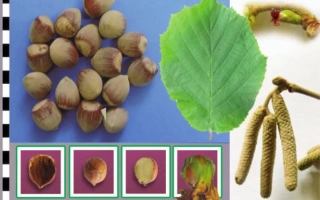
Filbert «Caucasus» – a mid-season variety developed in 1980 on the Black Sea coast of the Krasnodar region and included in the state register since 1999. It is distinguished by a vigorous bush up to 4 m in height and 3.5–4.5 m in diameter, with an oval crown of medium density and branches diverging at a right angle from the trunk. The trunk bark has a greenish-gray hue, while the shoots are of medium thickness, covered with «lenticels» and have a slightly drooping form.
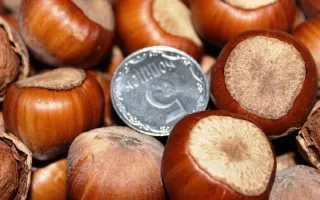
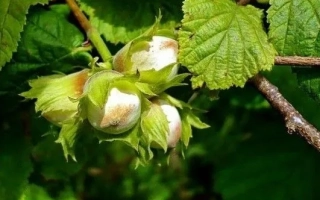
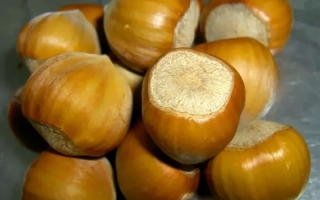
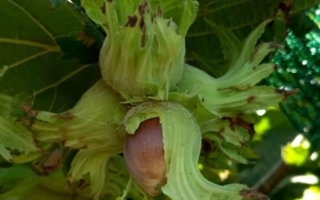
The nuts of the variety are characterized by a round shape, about 24 mm long and 23 mm wide. Fruits are gathered in inflorescences of 3–6 pieces, and the husk (cupule) easily separates from the nut at maturity. The shell is of medium thickness (1.1–1.2 mm), weakly ribbed, and light brown, containing a kernel weighing 1.7–2 g, which accounts for 47–49% of the total nut mass. The internal composition is about 69% fat, 17% protein, as well as vitamins of the B group and vitamin E.
The variety is distinguished by high yields (up to 7 kg per bush in a standard form) and stable fruiting. It is resistant to frost down to -32 °C, drought, and pests such as the filbert weevil, postman mite, and long-horned beetle. Filbert «Caucasus» is self-fertile (0.92–0.95), and its pollen is viable at 75–80%. Due to its good taste, close to dessert, and pleasant texture of the nuts, this variety is popular among consumers and gardeners. When grown in a standard form, removal of suckers is required, however, the plant is easy to adapt to mechanized harvest.
The nuts of the variety are characterized by a round shape, about 24 mm long and 23 mm wide. Fruits are gathered in inflorescences of 3–6 pieces, and the husk (cupule) easily separates from the nut at maturity. The shell is of medium thickness (1.1–1.2 mm), weakly ribbed, and light brown, containing a kernel weighing 1.7–2 g, which accounts for 47–49% of the total nut mass. The internal composition is about 69% fat, 17% protein, as well as vitamins of the B group and vitamin E.
The variety is distinguished by high yields (up to 7 kg per bush in a standard form) and stable fruiting. It is resistant to frost down to -32 °C, drought, and pests such as the filbert weevil, postman mite, and long-horned beetle. Filbert «Caucasus» is self-fertile (0.92–0.95), and its pollen is viable at 75–80%. Due to its good taste, close to dessert, and pleasant texture of the nuts, this variety is popular among consumers and gardeners. When grown in a standard form, removal of suckers is required, however, the plant is easy to adapt to mechanized harvest.
Video · 3 videos
Suggest a video →Crop & resistance
Pest resistance
Specifications
| Nut; Shape | |
|---|---|
| Nut; Fruit mass | 1.5-2.0 grams |
| Registration year | 1999 |
| Catalog | Catalog → Hazelnut |
| Legal data |
Show · 2
|
| Country | Georgia |
Not yet комментариев. Be the first!





See also
Often considered together with this variety




Recently viewed
Products you’ve viewed on this site
Reviews · 0