


SKU #70537
·
67 views
SOCHI 2
Hazelnut
User rating
0 votes0% positive reviews
No ratings yet — be the first.
Nut; Fruit mass
1.0-1.5 grams
Registration year
1999
Prices in stores
from1.99 €per seedling
pack from 1.99 € per 1 pcs
1 offer from 1 store
Store offers · 1 from 1 stores
Prices are updated on loadLoading offers…
Available at: Садовий-Розмай
Aggregator catalog: prices are collected automatically from store websites, normalized by AI and converted at the current exchange rate. Before ordering, confirm the price and availability on the store's website. This block is not indexed by search engines — the data is loaded after the page opens.
About product

Hazelnut «Sochi 2» is an early variety obtained through breeding by GNI VNIICiSK of the Russian Agricultural Academy based on the free-pollinated variety Cherkessky-2. The medium-sized bush reaches a height of 3.5–4 m and a width of up to 4 m, has a spreading crown of medium density with a not too compact arrangement of skeleton branches. Leaves are large (10–12 cm in length, 8–10 cm in width), el…
Nut; Fruit mass
1.0-1.5 grams
Registration year
1999
Description
Hazelnut «Sochi 2» is an early variety obtained through breeding by GNI VNIICiSK of the Russian Agricultural Academy based on the free-pollinated variety Cherkessky-2. The medium-sized bush reaches a height of 3.5–4 m and a width of up to 4 m, has a spreading crown of medium density with a not too compact arrangement of skeleton branches. Leaves are large (10–12 cm in length, 8–10 cm in width), elongated-oval in shape, slightly wrinkled and pubescent underneath; rootlets are grayish in color with small light specks. Flowering lasts 3–4 weeks: female inflorescences gather in groups of 6–10, male – in groups of 4–6. The variety is self-fertile (0.86–0.90) and also serves as a good pollinator for other hazelnuts.
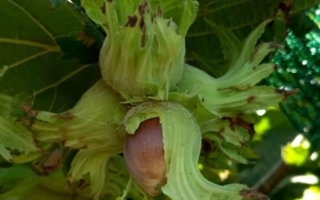
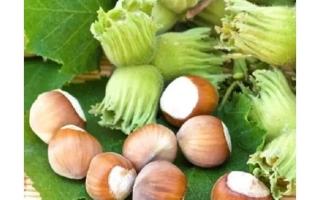
«Sochi 2» fruits are large, about 24 mm in length and 26 mm in width, slightly flattened with an acute apex. The shell (husk) is green in color, slightly longer than the nut, and separates easily at maturity; the shell is of medium thickness (1–1.1 mm), light brown and weakly ribbed. The kernel constitutes 48% of the total nut mass, weighs 1.3–1.5 g, contains about 70% fat and 18% protein, as well as B-group vitamins and vitamin E. The ripening period is early – maturity occurs at the end of June–beginning of August.
The variety is characterized by high yield (up to 1.5–2 t/ha of dry nuts in shell) and stable fruiting. It is resistant to frost, drought, bud mite and long-horned beetle, but winter hardiness is average, which leads to sucker formation. Nuts retain their consumer qualities for up to 3 years under controlled storage conditions. Due to the high content of fat and protein, «Sochi 2» is suitable for both food use and as raw material for oil production and other products.
«Sochi 2» fruits are large, about 24 mm in length and 26 mm in width, slightly flattened with an acute apex. The shell (husk) is green in color, slightly longer than the nut, and separates easily at maturity; the shell is of medium thickness (1–1.1 mm), light brown and weakly ribbed. The kernel constitutes 48% of the total nut mass, weighs 1.3–1.5 g, contains about 70% fat and 18% protein, as well as B-group vitamins and vitamin E. The ripening period is early – maturity occurs at the end of June–beginning of August.
The variety is characterized by high yield (up to 1.5–2 t/ha of dry nuts in shell) and stable fruiting. It is resistant to frost, drought, bud mite and long-horned beetle, but winter hardiness is average, which leads to sucker formation. Nuts retain their consumer qualities for up to 3 years under controlled storage conditions. Due to the high content of fat and protein, «Sochi 2» is suitable for both food use and as raw material for oil production and other products.
Crop & resistance
Pest resistance
Specifications
| Nut; Fruit mass | 1.0-1.5 grams |
|---|---|
| Registration year | 1999 |
| Catalog | Catalog → Hazelnut |
| Legal data |
Show · 2
|
| Country | Georgia |
Not yet комментариев. Be the first!






See also
Often considered together with this variety




Recently viewed
Products you’ve viewed on this site
Reviews · 0