


SKU #62066
·
62 views
Grape CRIMEAN MUSCAT
Grape
Ripening Period
Medium
Frost Resistance
Low (up to -18°C)
Resistance to Mildew
Low
Resistance to oidium
Low
Your mark
0 votes
0% positive ratings
Store offers · 1 from 1 store
1 offer in 1 store — from 3.95 € per seedling.
Available at: Приватная Марка
Prices are collected automatically from store websites and converted at the current exchange rate. Check the price and availability on the store website before ordering.
Description
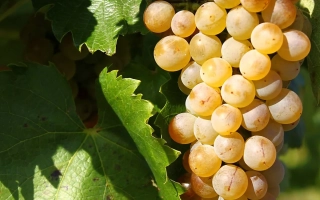
Crimean Muscat is an old grape variety belonging to the eastern eco-geographical group. The bushes have medium or high vigor, and shoots mature by 75-90 %. The leaves are medium to large, round, five-lobed or with 3-5 lobes, with a wavy lamina and no pubescence on the underside. The bunches have a cylindrical or cylindrical-conical shape, often with a wing, dense and of medium size, weighing up to 450 g. The berries are widely oval or round, pale yellow with a thick waxy bloom, weighing 3-4 g, with a dense skin and fleshy, juicy pulp. The taste is harmonious with a pronounced muscat aroma. The variety ripens in mid-September and is characterized by medium yield. The juice sugar content varies from 19 to 25 %, and acidity from 4 to 10.5 g/dm³, making the grape suitable for fresh consumption as well as for the production of semi-sweet, dessert, and table wines. Crimean Muscat prefers sunny and moderately dry places; under favorable conditions, shoots mature up to 90 %, ensuring good fruitfulness. However, the variety has low resistance to fungal diseases such as downy mildew, powdery mildew, and anthracnose, and is also susceptible to gray mold infection during a rainy autumn. The grapes are not resistant to winter frosts and late spring frosts, and are sensitive to moisture deficiency, which leads to weakened shoot growth. Additionally, the bunches can be damaged by the grape tortrix moth, and resistance to spider mites and phylloxera is low. Despite these shortcomings, Crimean Muscat is valued for its rich aroma and versatility in use.
Video · 2 videos
Suggest a video →Crop & resistance
Crop
Disease resistance
Pest resistance
Specifications
| Ripening Period | Medium |
|---|---|
| Frost Resistance | |
| Resistance to Mildew | |
| Resistance to oidium | |
| Resistance to Gray Mold | |
| Yield | Average |
| Bush Growth Power | |
| Bunch Size | Medium (300–500 g) |
| Berry Size | Medium (2–5 g) |
| Berry Color | |
| Flavor | |
| Sugar Content | High (>20%) |
| Care Requirement | |
| Purpose | |
| Registration year | 2021 |
| Catalog | Catalog → Grape |
| Legal data |
Show · 1 |
| Country | Russia |
No reviews yet. Be the first to share your experience.
Alternatives
Grapevine saplings · similar varieties





See also
Often considered together with this variety




Recently viewed
Products you’ve viewed on this site
Reviews