


SKU #62073
·
47 views
TANAGOZ
Grape
User rating
0 votes0% positive reviews
No ratings yet — be the first.
Usage Group
Dining
Ripening Period
Late
Resistance to oidium
Low
Yield
High
About product

Tanagoz is an aboriginal table grape variety originating from the Crimea and belonging to the eastern ecogeographical group. The leaves of this variety are large, round, and deeply dissected, while the flowers are bisexual. Clusters are large, conical in shape, lobed or branched, and medium density. Berries are large, round or slightly flattened, dark purple with a moderate waxy coating. The skin…
Usage Group
Dining
Ripening Period
Late
Resistance to oidium
Low
Yield
High
Description
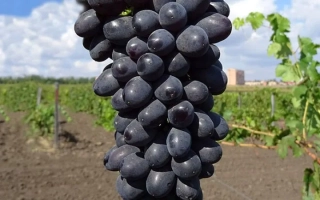
Tanagoz is an aboriginal table grape variety originating from the Crimea and belonging to the eastern ecogeographical group. The leaves of this variety are large, round, and deeply dissected, while the flowers are bisexual. Clusters are large, conical in shape, lobed or branched, and medium density. Berries are large, round or slightly flattened, dark purple with a moderate waxy coating. The skin is thin, and the flesh is meaty-juicy with a simple taste. The average cluster weight is about 430 grams. Tanagoz ripens in late September - early October, belonging to varieties of the late ripening period.
This variety is characterized by high productivity and good drought resistance, which allows it to successfully withstand periodic droughts. However, it is sensitive to fungal diseases, especially oidium and grape leafworm, requiring careful care and plant protection. Tanagoz is mainly used fresh but also suitable for preparing traditional products such as bekmis and marinades and stores well during the winter period.
Studies of productivity and quality of local Crimean grape varieties, including Tanagoz, revealed valuable economic traits that contribute to the effective use of this variety's genetic resources in scientific and breeding purposes. Despite limited distribution and mostly being found in collections, Tanagoz is of interest to grape growers and researchers due to its unique characteristics and adaptation to local conditions.
This variety is characterized by high productivity and good drought resistance, which allows it to successfully withstand periodic droughts. However, it is sensitive to fungal diseases, especially oidium and grape leafworm, requiring careful care and plant protection. Tanagoz is mainly used fresh but also suitable for preparing traditional products such as bekmis and marinades and stores well during the winter period.
Studies of productivity and quality of local Crimean grape varieties, including Tanagoz, revealed valuable economic traits that contribute to the effective use of this variety's genetic resources in scientific and breeding purposes. Despite limited distribution and mostly being found in collections, Tanagoz is of interest to grape growers and researchers due to its unique characteristics and adaptation to local conditions.
Crop & resistance
Crop
Disease resistance
Specifications hover over for a hint about the specification
| Usage Group | |
|---|---|
|
Ripening Period
Ripening Period
It takes 70-100 days until pepper reaches flowering stage, 130-160 days until technical fruit ripeness, and 135-180 days until physiological ripeness. |
Late |
| Resistance to oidium | |
|
Yield
Yield
Overall bulb harvest per unit area. Depends on both onion variety characteristics and agronomic practices, fertilizers, and irrigation. Under optimal growing conditions, an onion yield of 100 tons per hectare and above is not considered record-breaking. |
High |
| Flower Type | |
| Bunch Size | Medium (300–500 g) |
| Berry Size | Large (5–8 g) |
| Flavor | |
| Care Requirement | |
| Assignment | |
| Features | |
| Registration year | 2021 |
| Catalog | Catalog → Grape |
| Legal data |
Show · 1 |
| Country | Russia |
Store offers
Prices are updated on loadLoading offers…
Aggregator catalog: prices are collected automatically from store websites, normalized by AI and converted at the current exchange rate. Before ordering, confirm the price and availability on the store's website. This block is not indexed by search engines — the data is loaded after the page opens.
Not yet комментариев. Be the first!
Alternatives
Grapevine saplings · similar varieties





See also
Often considered together with this variety


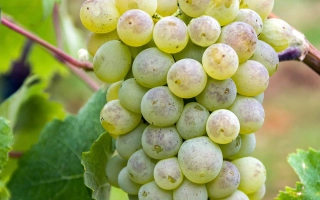


Champagne Renet (Paper Renet, Remarkable Renet, Paper Renet)
11.3K 3 offers
2.89 €per seedling ≈ 149 ₴
Recently viewed
Products you’ve viewed on this site
Reviews · 0