


SKU #72824
·
70 views
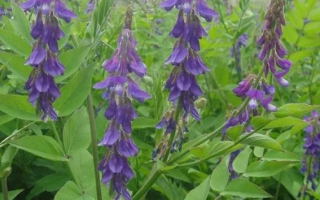
Galega
Goat's Rue
User rating
0 votes0% positive reviews
No ratings yet — be the first.
Assignment
Feed, Honeycomb for Bees, For Hay, Silage
Plant Type
Bean Plant
Plant Height
120-140 cm
Registration year
2014
Prices in stores
from6.58 €per 1 kg
pack from 3.29 € per 500 g
1 offer from 1 store
Store offers · 1 from 1 stores
Prices are updated on loadLoading offers…
Available at: UleyShop
Aggregator catalog: prices are collected automatically from store websites, normalized by AI and converted at the current exchange rate. Before ordering, confirm the price and availability on the store's website. This block is not indexed by search engines — the data is loaded after the page opens.
About product

A high-yielding perennial legume and honey plant, essential for sustainable high-protein hay and silage production.
Assignment
Feed, Honeycomb for Bees, For Hay, Silage
Plant Type
Bean Plant
Plant Height
120-140 cm
Registration year
2014
Description
A Proven Choice for Sustainable Forage
The «Vest» Eastern Galega variety, developed by the V.R. Williams FRC VIK, represents a pinnacle in the breeding of perennial legumes. Engineered to thrive in diverse agricultural landscapes, this variety has built a solid reputation for its consistency and high nutrient output. It stands as a reliable pillar for livestock farms looking to maximize self-sufficiency through high-protein forage production.
Key Agronomic Features
Reaching a height of 120–140 cm, «Vest» produces a dense and nutritious biomass suitable for multiple harvesting methods. Its versatility goes beyond simple fodder; it is a highly regarded multifunctional plant:
- Forage Efficiency: Ideal for high-quality hay and silage production, providing livestock with essential proteins throughout the season.
- Apiculture Value: «Vest» serves as a prolific honey plant, supporting beekeeping integration and promoting biodiversity on the farm.
- Soil Health: As a nitrogen-fixing legume, it naturally enhances soil fertility and reduces weed competition through its robust growth habit.
For modern agricultural enterprises, selecting «Vest» means investing in long-term field productivity. With a lifespan extending over several years, this variety minimizes the need for frequent reseeding while delivering reliable yields that meet the nutritional demands of high-performance cattle. Its adaptability to varying soil types ensures that it remains a stable asset in any intensive forage management plan.
Crop & resistance
Crop
Specifications
| Assignment | |
|---|---|
| Plant Type | |
| Plant Height | 120-140 cm |
| Registration year | 2014 |
| Catalog | Catalog → Goat's Rue |
| Legal data |
Show · 1
|
| Country | Russia |
Not yet комментариев. Be the first!
Alternatives
Goat's Rue · similar varieties




See also
Often considered together with this variety




Recently viewed
Products you’ve viewed on this site
Reviews · 0