
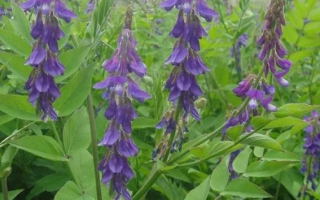

SKU #72832
·
61 views
Leader
Goat's Rue
Rossorgo Research InstituteUser rating
0 votes0% positive reviews
No ratings yet — be the first.
Assignment
Feed, Honeycomb for Bees
Plant Type
Bean Plant
Registration year
2009
About product

A perennial legume combining high nutritional value for livestock, excellent honey potential, and natural disease resistance.
Assignment
Feed, Honeycomb for Bees
Plant Type
Bean Plant
Registration year
2009
Description
A reliable source of protein and an effective honey plant
The «Lider» (Leader) goat's rue variety, developed by RosNIISK «Rossorgo», is a perennial legume utilized in farms focused on intensive livestock breeding and apiculture. The core advantage of this variety is its longevity: it provides stable yields of green mass for 10–12 years, significantly reducing the costs associated with annual soil preparation and reseeding.
Practical application in the field
Agronomists choose this variety to address several critical operational tasks:
- Sustainable forage base: Due to its high protein content, «Lider» is an ideal component for hay, haylage, and grass meal production. The crop starts its vegetation cycle early in the spring, allowing for the first cut much earlier than many other forage grasses.
- Soil enrichment: As a legume, «Lider» actively fixes atmospheric nitrogen, serving as an excellent predecessor in crop rotation.
- Honey production: Its prolonged flowering period makes it a valuable resource for apiaries, providing bees with a consistent nectar flow when other plants have already ceased blooming.
Resilience and economic efficiency
The «Lider» variety demonstrates high resistance to major pathogens that typically threaten legume crops. Genetic resistance to root rot and powdery mildew allows farmers to minimize fungicide use, thereby reducing the unit cost of feed. It also shows good tolerance to weevil damage, which is essential for maintaining crop density and total biomass volume. Thanks to the work of the originators — V.I. Zhuzhukin, V.S. Gorbunov, and M.G. Chabaev — the variety is adapted to conditions that require low-maintenance cultivation, making it a reliable choice for farms with various soil types.
Crop & resistance
Crop
Disease resistance
Pest resistance
Specifications
| Assignment | |
|---|---|
| Plant Type | |
| Registration year | 2009 |
| Catalog | Catalog → Goat's Rue |
| Manufacturer | Rossorgo Research Institute |
| Legal data |
Show · 7
|
| Country | Russia |
Store offers
Prices are updated on loadLoading offers…
Aggregator catalog: prices are collected automatically from store websites, normalized by AI and converted at the current exchange rate. Before ordering, confirm the price and availability on the store's website. This block is not indexed by search engines — the data is loaded after the page opens.
Not yet комментариев. Be the first!
Alternatives
Goat's Rue · similar varieties


See also
Often considered together with this variety



Recently viewed
Products you’ve viewed on this site
Reviews · 0