


Prices in stores
No offers yet — stores have not added prices for this product yet.
Similar varieties with prices
-
Record-PolyMalopolska Hodowla Roslin-HBP
from 5.73 €per 1 kg
-
 ECKENDORF MONOFSBEI HE RGAU-MSHA named after K.A. Timiryazev
from 6.59 €per 1 kg
ECKENDORF MONOFSBEI HE RGAU-MSHA named after K.A. Timiryazev
from 6.59 €per 1 kg
-
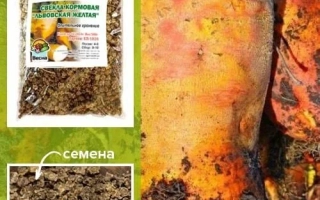 Lvivskaya Yellow
from 11.57 €per 1 kg
Lvivskaya Yellow
from 11.57 €per 1 kg
-
 UrsusMalopolska Hodowla Roslin-HBP
from 4.25 €per 1 kg
UrsusMalopolska Hodowla Roslin-HBP
from 4.25 €per 1 kg
Direction
Processing
Root: shape
Cylindrical
Root vegetable: color
Dark Red
Registration year
2000
Your mark
0 votes
0% positive ratings
Description
Troy fodder beet is a high-yielding fodder crop widely used in livestock farming to feed various types of agricultural animals. This biennial root crop is characterized by high nutritional value, richness in vitamins and microelements, making it an indispensable component of rations for cattle, sheep, horses, pigs, and poultry. Beet helps improve animal productivity, particularly by stimulating increased milk production and improving its quality through higher fat content and protein levels.
Troy fodder beet is characterized by high yield, which can reach 800 to 1500 centners per hectare with proper agronomic practices. The plant is frost-resistant, capable of germinating at temperatures from +3 to +4°C and enduring short-term frosts down to -4°C. For successful cultivation, fertile soils, preferably chernozems and brown podzolic soils, as well as adequate moisture, especially during seed germination and biomass growth in July-August, are required. The optimal temperature for uniform emergence is 12-15°C, and seeding density is adjusted with subsequent thinning to ensure high-quality root formation.
The Troy variety features cylindrical, red-colored roots with approximately 40% burial depth, reducing soil contamination and simplifying harvest. The beet is resistant to flowering and exhibits good tolerance to adverse conditions. Due to its juiciness and energy value, this fodder is versatile and widely demanded in agriculture. Purchasing seeds of Troy fodder beet from specialized stores guarantees high-quality planting material and favorable purchasing conditions, especially for bulk orders with delivery.
Troy fodder beet is characterized by high yield, which can reach 800 to 1500 centners per hectare with proper agronomic practices. The plant is frost-resistant, capable of germinating at temperatures from +3 to +4°C and enduring short-term frosts down to -4°C. For successful cultivation, fertile soils, preferably chernozems and brown podzolic soils, as well as adequate moisture, especially during seed germination and biomass growth in July-August, are required. The optimal temperature for uniform emergence is 12-15°C, and seeding density is adjusted with subsequent thinning to ensure high-quality root formation.
The Troy variety features cylindrical, red-colored roots with approximately 40% burial depth, reducing soil contamination and simplifying harvest. The beet is resistant to flowering and exhibits good tolerance to adverse conditions. Due to its juiciness and energy value, this fodder is versatile and widely demanded in agriculture. Purchasing seeds of Troy fodder beet from specialized stores guarantees high-quality planting material and favorable purchasing conditions, especially for bulk orders with delivery.
Crop & resistance
Disease resistance
Specifications
| Direction | |
|---|---|
| Root: shape | |
| Root vegetable: color | |
| Registration year | 2000 |
| Catalog | Catalog → Feed Beet |
| Manufacturer | MARIBO SEED |
| Country | Denmark |
No reviews yet. Be the first to share your experience.





See also
Often considered together with this variety






Recently viewed
Products you’ve viewed on this site
Reviews