


SKU #61272
·
61 views
NORTHERN ORANGE
Feed Beet
User rating
0 votes0% positive reviews
No ratings yet — be the first.
Direction
Recycling, Storage
Root; shape
Conical
Maturation Period
110-120 days
Registration year
1953
About product

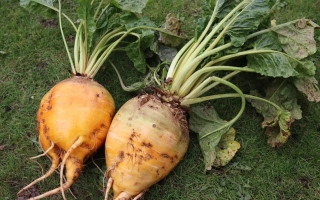
Northern Orange fodder beet is a mid-maturing, high-yielding variety that ripens within 120-130 days. The root crops have an elongated oval or conical shape, red-orange in color with dense and juicy pulp. The average weight of the root crop is about 800-1000 grams, which ensures a significant volume of nutritious feed. The variety is distinguished by its resistance to bolting, uniformity, and stab…
Direction
Recycling, Storage
Root; shape
Conical
Maturation Period
110-120 days
Registration year
1953
Description
Northern Orange fodder beet is a mid-maturing, high-yielding variety that ripens within 120-130 days. The root crops have an elongated oval or conical shape, red-orange in color with dense and juicy pulp. The average weight of the root crop is about 800-1000 grams, which ensures a significant volume of nutritious feed. The variety is distinguished by its resistance to bolting, uniformity, and stable yield, making it a reliable choice for feeding animals during the winter and early spring periods.
Root crops contain important nutrients, including sugars, protein, fat, fiber, dry matter, and vitamins, which ensure the high nutritional value of the feed. Beet tops can be used both fresh and silaged, and are also applied for the preparation of grass meal. The plant forms a basal rosette of large leaves with well-developed petioles, while the root crops grow 2/3 above ground, which facilitates harvest.
For sowing, it is recommended to use seeds that germinate at temperatures of 2-5 °C, and seedlings appear at 12-15 °C. Sowing is carried out in May at a depth of about 3 cm with a row spacing of 45 cm and a distance between plants of 10 cm. Northern Orange beet prefers loamy and loamy sandy soils, rich in organic matter, well-structured, and non-acidic. The plant is moderately demanding on heat, lighting, and moisture, especially during germination and seedling development. For storing root crops, a temperature from 0 to +3 °C is optimal, which allows preserving their nutritional properties and good storability.
Root crops contain important nutrients, including sugars, protein, fat, fiber, dry matter, and vitamins, which ensure the high nutritional value of the feed. Beet tops can be used both fresh and silaged, and are also applied for the preparation of grass meal. The plant forms a basal rosette of large leaves with well-developed petioles, while the root crops grow 2/3 above ground, which facilitates harvest.
For sowing, it is recommended to use seeds that germinate at temperatures of 2-5 °C, and seedlings appear at 12-15 °C. Sowing is carried out in May at a depth of about 3 cm with a row spacing of 45 cm and a distance between plants of 10 cm. Northern Orange beet prefers loamy and loamy sandy soils, rich in organic matter, well-structured, and non-acidic. The plant is moderately demanding on heat, lighting, and moisture, especially during germination and seedling development. For storing root crops, a temperature from 0 to +3 °C is optimal, which allows preserving their nutritional properties and good storability.
Specifications hover over for a hint about the specification
|
Direction
Direction
Existing varieties and types of cabbage are grown for fresh consumption, long-term storage, and technical processing. |
|
|---|---|
|
Root; shape
Root; shape
Roots can be round, elongated-round, cylindrical, conical. |
|
|
Maturation Period
Maturation Period
Vegetation period from emergence to technical maturity 30-50 days. |
110-120 days |
| Registration year | 1953 |
| Catalog | Catalog → Feed Beet |
| Legal data | |
| Country | Russia |
Store offers
Prices are updated on loadLoading offers…
Available at: Фермер Центр · Procvetok
Aggregator catalog: prices are collected automatically from store websites, normalized by AI and converted at the current exchange rate. Before ordering, confirm the price and availability on the store's website. This block is not indexed by search engines — the data is loaded after the page opens.
Not yet комментариев. Be the first!



See also
Often considered together with this variety






Recently viewed
Products you’ve viewed on this site
Reviews · 0