


Prices in stores
No offers yet — stores have not added prices for this product yet.
Similar varieties with prices
-
UrsusMalopolska Hodowla Roslin-HBP
from 4.25 €per 1 kg
-
 Ursus PolyMalopolska Hodowla Roslin-HBP
from 4.15 €per 1 kg
Ursus PolyMalopolska Hodowla Roslin-HBP
from 4.15 €per 1 kg
-
 KosimaKWS
from 0.22 €
KosimaKWS
from 0.22 €
-
 Zentaur PolyMalopolska Hodowla Roslin-HBP
from 2.39 €per 1 kg
Zentaur PolyMalopolska Hodowla Roslin-HBP
from 2.39 €per 1 kg
Direction
Processing, Storage
Root: shape
Cylindrical
Maturation Period
90-100 days
Registration year
1999
Your mark
0 votes
0% positive ratings
Description
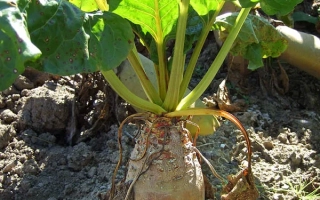
Tamara sugar beet is a medium-maturing, high-yielding variety intended for producing high yields of fodder beet. The roots are cylindrical with juicy white flesh, characterized by high dry matter content (up to 12-14%) and sugar. The upper part of the root and the crown are located above ground, facilitating mechanized and manual harvest. The variety is distinguished by excellent storability, transportability, and high disease resistance, making it one of the popular options for cultivation in private farms and agricultural enterprises.
Tamara exhibits good adaptation to various climatic conditions and efficient nutrient uptake, contributing to stable yields. A key aspect of successful cultivation is proper agronomy: soil preparation, fertilizer application, selection of suitable preceding crops such as cucumbers, early potatoes, and cabbage, which were fertilized with organic fertilizers. The main crop yield can reach 520 centners per hectare, while the secondary crop yield can reach 208 centners per hectare.
This sugar beet variety is widely used in livestock farming as a source of energy and fiber for animal feed. Due to its qualities, Tamara provides high nutritional value for feed, positively affecting animal productivity. The variety is resistant to bolting and suitable for mechanized harvesting, facilitating its use in modern agricultural technologies.
Tamara exhibits good adaptation to various climatic conditions and efficient nutrient uptake, contributing to stable yields. A key aspect of successful cultivation is proper agronomy: soil preparation, fertilizer application, selection of suitable preceding crops such as cucumbers, early potatoes, and cabbage, which were fertilized with organic fertilizers. The main crop yield can reach 520 centners per hectare, while the secondary crop yield can reach 208 centners per hectare.
This sugar beet variety is widely used in livestock farming as a source of energy and fiber for animal feed. Due to its qualities, Tamara provides high nutritional value for feed, positively affecting animal productivity. The variety is resistant to bolting and suitable for mechanized harvesting, facilitating its use in modern agricultural technologies.
Crop & resistance
Disease resistance
Specifications
| Direction | |
|---|---|
| Root: shape | |
| Maturation Period | 90-100 days |
| Registration year | 1999 |
| Catalog | Catalog → Feed Beet |
| Manufacturer | KWS |
| Country | Germany |
No reviews yet. Be the first to share your experience.



See also
Often considered together with this variety






Recently viewed
Products you’ve viewed on this site
Reviews