


Direction
Storage, Processing
Root: shape
Cylindrical
Maturation Period
100-110 days
Registration year
1999
Your mark
0 votes
0% positive ratings
Store offers · 7 from 7 stores
7 offers in 7 stores — from 0.22 € per 1 kg.
Available at: Dar Sad · Greenbob · Greendecor · Greenmarket · komoraseeds-com-ua · Pivonia · semka-bg
Prices are collected automatically from store websites and converted at the current exchange rate. Check the price and availability on the store website before ordering.
Description
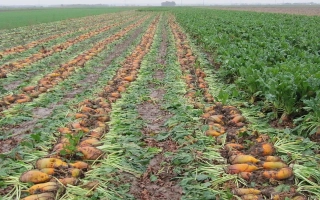
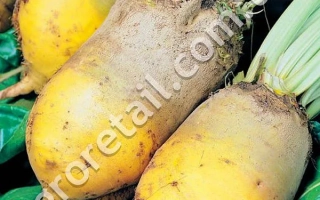
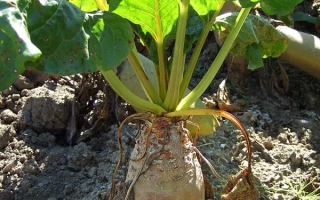
Kosima sugar beet is a medium-maturing (105-130 days) high-yielding semi-sweet variety intended for cultivation as a fodder crop for animals. The roots are cylindrical or oval in shape, with white, juicy flesh, characterized by high dry matter content (up to 12-14%) and sugar. The upper part of the root and its crown are located above ground, facilitating mechanical and manual harvest. The variety exhibits high storability, transportability, and resistance to diseases such as cercosporosis and virus yellows, as well as resistance to cracking and drought. Kosima is well-adapted to various soil conditions, including poor soils with an optimal pH around 6.0. Root depth is approximately 60%, allowing effective mechanical harvesting after pre-harvest trimming of foliage. The variety is resistant to root and leaf damage, contributing to long-term storage at temperatures from +0.5 to +4°C until late spring. Best preceding crops for Kosima fodder beet are cucumbers, early potatoes, and cabbage, which were fertilized with organic manure. Kosima fodder beet is a versatile and juicy feed for various livestock. For cattle, it promotes lean, low-fat meat production; for dairy cows, it stimulates high-quality milk production. For rabbits, this feed is an excellent source of nutrition when combined with straw or hay. For horses, it provides easily digestible energy and necessary vitamin A, often deficient during winter. For pigs, Kosima serves as an excellent substitute for potatoes, providing a fat-free feed.
Crop & resistance
Disease resistance
Specifications
| Direction | |
|---|---|
| Root: shape | |
| Maturation Period | 100-110 days |
| Registration year | 1999 |
| Catalog | Catalog → Feed Beet |
| Manufacturer | KWS |
| Legal data | |
| Country | Germany |
No reviews yet. Be the first to share your experience.




See also
Often considered together with this variety





Recently viewed
Products you’ve viewed on this site
Reviews