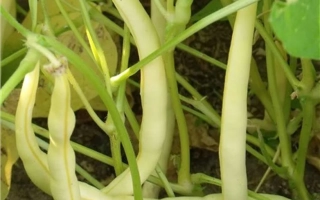
Libra bean is a medium-maturing bush-type snap bean variety with a vegetation period from emergence to technical maturity of 60-65 days. The plant is compact, reaching a height of 40-50 cm, with green, fleshy pods 11-14 cm long and up to 9 mm wide, which are fiber-free. Seeds are white, and pods are mainly concentrated in the upper part of the plant. The variety is distinguished by high taste qualities and is suitable for both fresh consumption and for canning, soups, and side dishes. Libra is recommended for both manual and mechanical harvesting. Libra bean variety has high resistance to main diseases such as anthracnose and bacterial blight, ensuring stable yields and reducing the need for treatments. The bean is warm-loving, prefers fertile, light soil mixtures, and does not tolerate close proximity to groundwater. Optimal planting time is late May or early June, at temperatures not lower than +12°C. Before planting, seeds are recommended to be kept in a damp cloth, ensuring that cotyledons do not open. Seedlings emerge within 5-7 days after sowing. For growing Libra bean, a planting scheme of 20x30 cm with seed depth of 5-8 cm depending on soil structure is recommended. Bush beans are usually planted in rows in a checkerboard pattern, forming three to four rows. Pods are harvested regularly when seeds reach the size of wheat grains, with an interval of 3-4 days. For long-term storage, beans are better frozen. Additionally, beans are a valuable source of easily digestible proteins and iron, contributing to improved immunity and blood formation. As a leguminous plant, Libra also serves as a green manure, enriching soil with nitrogen and enhancing fertility, positively affecting yields of neighboring crops.