
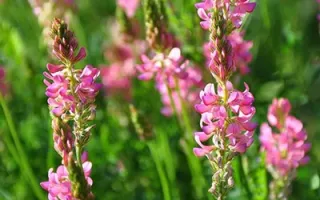

SKU #74570
·
60 views
Kirovohradske 22
Sainfoin
User rating
0 votes0% positive reviews
No ratings yet — be the first.
Usage Type
On feed
Green Mass Yield (t/ha)
25-40
Drought Resistance
High
Crude Protein Content, %
15-19
About product

A reliable high-protein forage source with superior regenerative capacity and comprehensive disease resistance.
Usage Type
On feed
Green Mass Yield (t/ha)
25-40
Drought Resistance
High
Crude Protein Content, %
15-19
Description
Engineering efficiency in forage production: the potential of «Kirovohradskyi 22» sainfoin
Developed by the Kirovohrad Institute of Agro-Industrial Production, «Kirovohradskyi 22» is a specialized agricultural solution designed to build a stable forage base under demanding climatic conditions. The technical value of this variety lies in its optimal balance between high biological productivity and robust resistance to major legume pathogens.
Biological defense and resistance architecture
The variety demonstrates systemic resistance to fungal infections, which is critical for perennial legume stands. Its genetically embedded resistance to Fusarium, Ascochyta, and powdery mildew significantly minimizes biomass losses during early development stages and eliminates the need for intensive fungicide applications. This reduces operational overheads while maintaining crop health.
Technical performance and agronomic specifications
- Nutritional output: raw protein content ranging from 15% to 19%, providing a high-quality nutritional base for livestock rations.
- Vegetation efficiency: green mass yield reaches 25–40 t/ha, supported by a deep root architecture optimized for nutrient uptake.
- Drought tolerance: high adaptability to moisture deficiency mitigates climatic risks, ensuring consistent production even during arid growing seasons.
«Kirovohradskyi 22» is engineered for intensive forage production. With high regenerative capacity following harvest cycles, this sainfoin delivers uniform yield throughout the growing season. For agronomists, choosing this variety represents a strategic investment in a biologically stable, high-energy forage conveyor.
Crop & resistance
Crop
Disease resistance
Specifications
| Usage Type | |
|---|---|
| Green Mass Yield (t/ha) | 25-40 |
| Drought Resistance | |
| Crude Protein Content, % | 15-19 |
| Registration year | 2002 |
| Catalog | Catalog → Sainfoin |
| Legal data |
Show · 1
|
| Country | Ukraine |
Store offers
Prices are updated on loadLoading offers…
Aggregator catalog: prices are collected automatically from store websites, normalized by AI and converted at the current exchange rate. Before ordering, confirm the price and availability on the store's website. This block is not indexed by search engines — the data is loaded after the page opens.
Not yet комментариев. Be the first!


See also
Often considered together with this variety




Recently viewed
Products you’ve viewed on this site
Reviews · 0