


SKU #72141
·
54 views
ZERNogradsky 3
Sainfoin
User rating
0 votes0% positive reviews
No ratings yet — be the first.
Vegetation Period
90-110
Usage Type
On feed
Green Mass Yield (t/ha)
30-45
Drought Resistance
High
Prices in stores
from3.74 €per 1 kg
pack from 1.87 € per 0.5 kg
1 offer from 1 store
Store offers · 1 from 1 stores
Prices are updated on loadLoading offers…
Available at: Good Harvest
Aggregator catalog: prices are collected automatically from store websites, normalized by AI and converted at the current exchange rate. Before ordering, confirm the price and availability on the store's website. This block is not indexed by search engines — the data is loaded after the page opens.
About product

Spartium "Zernogradsky 3" – tall perennial herbaceous variety, created on the basis of an artificial hybrid population using biotypic selection. The plant reaches a height of 95 to 110 cm, has a semi-erect and erect bush, light-green ribbed stem without pubescence and medium roughness. Leaves are lanceolate, obovate, dark green, soft, without waxy bloom; stipules are triangular-tapered, non-pubesc…
Vegetation Period
90-110
Usage Type
On feed
Green Mass Yield (t/ha)
30-45
Drought Resistance
High
Description
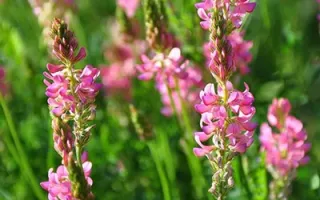
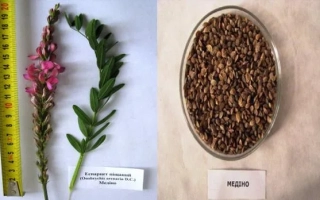
Spartium "Zernogradsky 3" – tall perennial herbaceous variety, created on the basis of an artificial hybrid population using biotypic selection. The plant reaches a height of 95 to 110 cm, has a semi-erect and erect bush, light-green ribbed stem without pubescence and medium roughness. Leaves are lanceolate, obovate, dark green, soft, without waxy bloom; stipules are triangular-tapered, non-pubescent, from colorless to brown. Inflorescence – a cylindrical raceme with a tapering apex, loose and pink. Seeds are medium-sized, bean-shaped, brown, hard 5–8%. Vegetative period is 3–5 days longer than the standard (95–100 days), which allows the plant to surpass the standard variety in height and number of generative stems by the time of budding.
The variety is distinguished by high yield: green mass – about 45 t/ha, hay – 10.7 t/ha, seeds – from 0.4 to 1.5 t/ha, dry matter – 4.3–5.5 t/ha. Zernogradsky3 has medium winter hardiness and high drought resistance, and is also resistant to diseases: moderately affected by ascohitosis, weakly susceptible to root rots and seed pests. In terms of protection against diseases and pests, the variety does not lag behind the popular North Caucasus two-cut.
Spartium is widely used as feed, silage, and pasture grass due to its high content of nutrients, making it valuable for animal husbandry and improving soil fertility. Recommended for field grass seeding, greening of slopes and sandy lands. Sowing rate is 70–80 kg/ha with ordinary row seeding and up to 100 kg/ha under cover of spring crops; seeds are sown in the amount of 3.5 to 4.5 million per hectare.
The variety is distinguished by high yield: green mass – about 45 t/ha, hay – 10.7 t/ha, seeds – from 0.4 to 1.5 t/ha, dry matter – 4.3–5.5 t/ha. Zernogradsky3 has medium winter hardiness and high drought resistance, and is also resistant to diseases: moderately affected by ascohitosis, weakly susceptible to root rots and seed pests. In terms of protection against diseases and pests, the variety does not lag behind the popular North Caucasus two-cut.
Spartium is widely used as feed, silage, and pasture grass due to its high content of nutrients, making it valuable for animal husbandry and improving soil fertility. Recommended for field grass seeding, greening of slopes and sandy lands. Sowing rate is 70–80 kg/ha with ordinary row seeding and up to 100 kg/ha under cover of spring crops; seeds are sown in the amount of 3.5 to 4.5 million per hectare.
Crop & resistance
Crop
Disease resistance
Specifications
| Vegetation Period | 90-110 |
|---|---|
| Usage Type | |
| Green Mass Yield (t/ha) | 30-45 |
| Drought Resistance | |
| Registration year | 2001 |
| Catalog | Catalog → Sainfoin |
| Legal data |
Show · 1
|
| Country | Russia |
Not yet комментариев. Be the first!




See also
Often considered together with this variety


Recently viewed
Products you’ve viewed on this site
Reviews · 0