


SKU #74575
·
56 views
Arsey
Sainfoin
User rating
0 votes0% positive reviews
No ratings yet — be the first.
Usage Type
On feed, Honeybee, Cover Crop
Drought Resistance
High
Crude Protein Content, %
15-19
Weight of 1000 seeds, g
18-25
Prices in stores
from1.67 €per 1 kg
pack from 1.42 € per 500 g
2 offers from 2 stores
Store offers · 2 from 2 stores
Prices are updated on loadLoading offers…
Available at: Агроексперт-Трейд · Semena
Aggregator catalog: prices are collected automatically from store websites, normalized by AI and converted at the current exchange rate. Before ordering, confirm the price and availability on the store's website. This block is not indexed by search engines — the data is loaded after the page opens.
About product

Arsey is a mid-late variety of esparcet, developed by the Institute of Steppe Agriculture of NAAS. The plant has an upright bushy growth with medium bush density and a height of 100–120 cm. Bushes are characterized by stems of medium roughness, partially filled, slightly hairy, with internodes of 7–9. Leaves are complex, odd-pinnate, with lanceolate lobes and weak gray pubescence; the lower side o…
Usage Type
On feed, Honeybee, Cover Crop
Drought Resistance
High
Crude Protein Content, %
15-19
Weight of 1000 seeds, g
18-25
Description
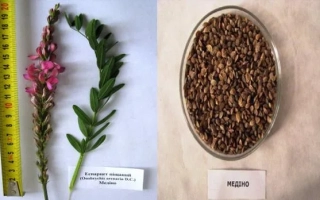
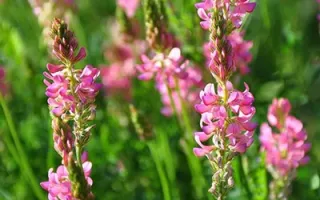
Arsey is a mid-late variety of esparcet, developed by the Institute of Steppe Agriculture of NAAS. The plant has an upright bushy growth with medium bush density and a height of 100–120 cm. Bushes are characterized by stems of medium roughness, partially filled, slightly hairy, with internodes of 7–9. Leaves are complex, odd-pinnate, with lanceolate lobes and weak gray pubescence; the lower side of the leaf is dark green, the upper – light green. Flowers are pink, located in inflorescences of medium length and density, while medium-sized pods have a light brown color with small spines along the dorsal suture.
The Arsey variety is distinguished by high drought resistance (8–9) and winter hardiness (9), as well as low susceptibility to diseases (8–9). It grows well on all soil types, except acidic, including rocky and gravelly soils, and is capable of withstanding salinization. Due to nitrogen-fixing properties, during two years of cultivation the plant can accumulate 100–120 kg/ha of nitrogen, and after harvesting green mass leaves 63.4–84.6 kg/ha of nitrogen and 19.7–26.1 kg/ha of phosphorus in the soil.
Arsey is used as a fodder crop, nectariferous plant, and green manure. The yield of green mass is 35.0–37.0 t/ha, and dry material is 8.0–8.3 t/ha. The mass of 1000 pods is 18–20 g, seed yield in the first year is 0.2–0.4 t/ha, and from the second year reaches 1.0–1.4 t/ha. The protein content of green mass is 17–19%, which makes the plant a valuable fodder for livestock. The variety is practically single-handed and can be used in field, fodder, and grain-fodder crop rotations, including stubble crops.
For planting, early spring or summer uncovered method is recommended, sowing rate is 90–100 kg/ha. Optimal seed sowing depth: 2–3 cm on heavy soils and 3–4 cm on medium and light soils. After the first harvest of green mass, the second harvest can yield up to 60% of the first, which increases the overall productivity of the crop.
The Arsey variety is distinguished by high drought resistance (8–9) and winter hardiness (9), as well as low susceptibility to diseases (8–9). It grows well on all soil types, except acidic, including rocky and gravelly soils, and is capable of withstanding salinization. Due to nitrogen-fixing properties, during two years of cultivation the plant can accumulate 100–120 kg/ha of nitrogen, and after harvesting green mass leaves 63.4–84.6 kg/ha of nitrogen and 19.7–26.1 kg/ha of phosphorus in the soil.
Arsey is used as a fodder crop, nectariferous plant, and green manure. The yield of green mass is 35.0–37.0 t/ha, and dry material is 8.0–8.3 t/ha. The mass of 1000 pods is 18–20 g, seed yield in the first year is 0.2–0.4 t/ha, and from the second year reaches 1.0–1.4 t/ha. The protein content of green mass is 17–19%, which makes the plant a valuable fodder for livestock. The variety is practically single-handed and can be used in field, fodder, and grain-fodder crop rotations, including stubble crops.
For planting, early spring or summer uncovered method is recommended, sowing rate is 90–100 kg/ha. Optimal seed sowing depth: 2–3 cm on heavy soils and 3–4 cm on medium and light soils. After the first harvest of green mass, the second harvest can yield up to 60% of the first, which increases the overall productivity of the crop.
Crop & resistance
Crop
Specifications
| Usage Type | |
|---|---|
| Drought Resistance | |
| Crude Protein Content, % | 15-19 |
| Weight of 1000 seeds, g | 18-25 |
| Registration year | 2021 |
| Catalog | Catalog → Sainfoin |
| Legal data |
Show · 1
|
| Country | Ukraine |
Not yet комментариев. Be the first!


See also
Often considered together with this variety




Recently viewed
Products you’ve viewed on this site
Reviews · 0