
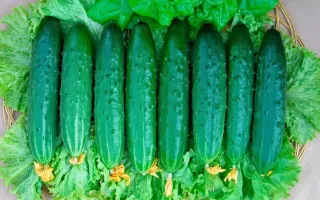

SKU #53269
·
24 views
CUCUMBER TSXA 3707
Cucumber
UNP "Vegetable OS named after V.I. Edelstein"User rating
0 votes0% positive reviews
No ratings yet — be the first.
Plant Type
Vegetative
Pollination Type
Pollinated by bees
Beginning of fruiting
50 - 55 days
Growing
Covered Ground, Glass greenhouses
About product

A high-quality, bee-pollinated cucumber variety designed for professional glasshouse cultivation.
Plant Type
Vegetative
Pollination Type
Pollinated by bees
Beginning of fruiting
50 - 55 days
Growing
Covered Ground, Glass greenhouses
Description
The Professional Standard: TSKhA 3707 Greenhouse Cucumber
For large-scale greenhouse enterprises, the TSKhA 3707 cucumber from the Edelstein Vegetable Experimental Station represents a reliable, classic choice for traditional soil and substrate cultivation. Developed by Alexander Vladimirovich Borisov, this bee-pollinated variety remains a staple for growers who prioritize flavor profile and fruit density over the convenience of parthenocarpic hybrids.
Growing Dynamics and Crop Management
Characterized by a vegetative growth type, TSKhA 3707 requires precise canopy management. Agronomists must monitor the balance between foliage and fruit production to ensure optimal yields. With a maturity window of 50–55 days, it fits well into standard greenhouse crop rotation cycles. It is explicitly designed for high-glass greenhouse environments where climate control and biological pollination are properly managed.
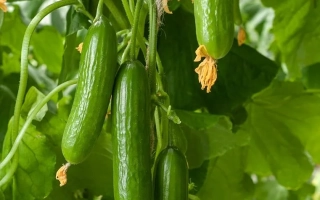
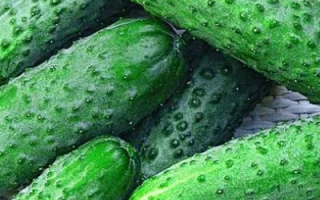
The fruit itself is a standout in the salad cucumber market. Weighing between 200 and 250 grams with a length of 15–20 cm, these cucumbers are substantial and uniform. The skin is fine-warted and deep green, providing a premium appearance that is highly sought after by consumers who prefer the crunch and aroma of naturally pollinated vegetables.
Key Advantages and Considerations
- Disease Resilience: The variety shows strong resistance to major greenhouse pathogens, including Ascochyta, various rots, and powdery mildew. This reduces the need for frequent fungicide applications.
- Superior Culinary Quality: The bee-pollinated nature of the crop ensures a firm, dense interior that holds up better during storage and transport compared to many modern fast-maturing varieties.
- Specialized Niche: The requirement for insect pollination makes this variety best suited for operations that utilize bumblebees or honeybees, ensuring higher fruit set and quality.
TSKhA 3707 is tailored for the experienced grower who manages a professional glasshouse facility and prioritizes the quality of the end-product. It is a workhorse variety that excels when given the right environmental conditions and a managed pollination program.
Crop & resistance
Disease resistance
Specifications hover over for a hint about the specification
| Plant Type | |
|---|---|
|
Pollination Type
Pollination Type
Based on pollination type, all existing cucumber varieties are divided into two groups: insect-pollinated and parthenocarpic (parthenocarpics). Insect-pollinated — cucumber varieties that are pollinated by insects. The plant has both male and female flowers (sterile flowers). Par... |
|
|
Beginning of fruiting
Beginning of fruiting
The early maturity of watermelon varieties mainly depends on the duration of growth and fruit ripening phases, rather than the timing of female flower blooming. Many varieties, ripening at different times, begin to bloom almost simultaneously. Approximately 30 days after fruit se... |
50 - 55 days |
|
Growing
Growing
Eggplant is grown in open fields and under protective cover on small areas. |
|
|
Fruit; spines
Fruit; spines
Important variety characteristic of cucumber. Can be finely ribbed or coarsely ribbed with white and black spines. |
|
|
Fruit; length
Fruit; length
Length from 6 to 70 cm. |
15 - 20 cm |
|
Fruit; flower
Fruit; flower
At technical maturity, fruit color varies from white, light purple to dark purple. |
|
|
Fruit; weight
Fruit; weight
Table watermelons weigh 0.6-16 kg. |
200, 250 |
| Registration year | 1987 |
| Catalog | Catalog → Cucumber |
| Manufacturer | UNP "Vegetable OS named after V.I. Edelstein" |
| Legal data |
Show · 1
|
| Country | Russia |
Store offers
Prices are updated on loadLoading offers…
Aggregator catalog: prices are collected automatically from store websites, normalized by AI and converted at the current exchange rate. Before ordering, confirm the price and availability on the store's website. This block is not indexed by search engines — the data is loaded after the page opens.
Not yet комментариев. Be the first!
Alternatives
Cucumber seeds · similar varieties






See also
Often considered together with this variety




Recently viewed
Products you’ve viewed on this site
Reviews · 0