


SKU #46341
·
72 views
Sammit
Cherry, Sour Cherry
User rating
0 votes0% positive reviews
No ratings yet — be the first.
Ripening Period
Medium (third decade of June – first decade of July)
Fruit Color
Red, Dark Red
Fruit Size
Large (6–8 g)
Flavor
Sweet
Store offers · 3 from 3 stores
Prices are updated on loadLoading offers…
Available at: AYRIS · Экосад · Megasad · Сади Буковини · Саджанці дерев
Aggregator catalog: prices are collected automatically from store websites, normalized by AI and converted at the current exchange rate. Before ordering, confirm the price and availability on the store's website. This block is not indexed by search engines — the data is loaded after the page opens.
About product

Cherries of the Sammit variety are an energetic and high-yielding Canadian selection, developed in 1973 by crossing the Van and Sem varieties in Summerland, British Columbia. Trees of this variety are vigorous with wide, open crowns of medium density. Dwarf rootstocks can be used to slow growth by approximately a quarter. Fruit-bearing begins on the 4th–5th year after planting, and the harvest per…
Ripening Period
Medium (third decade of June – first decade of July)
Fruit Color
Red, Dark Red
Fruit Size
Large (6–8 g)
Flavor
Sweet
Description
Cherries of the Sammit variety are an energetic and high-yielding Canadian selection, developed in 1973 by crossing the Van and Sem varieties in Summerland, British Columbia. Trees of this variety are vigorous with wide, open crowns of medium density. Dwarf rootstocks can be used to slow growth by approximately a quarter. Fruit-bearing begins on the 4th–5th year after planting, and the harvest period falls at the end of June to the beginning of July, making this variety mid-late.
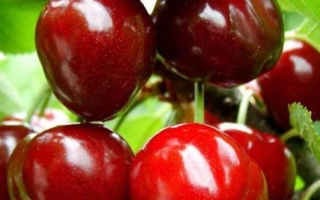
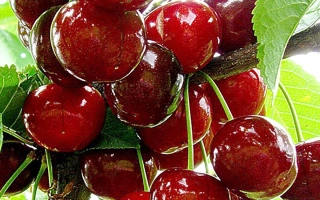
The Sammit cherry fruits are large, weighing 9–10 grams, with bright red skin that darkens to deep red as it ripens. The flesh is reddish with a yellowish tint, very juicy, crisp, and firm, with a pleasant wine-sweet flavor and aroma. The pit is medium-sized and separates well from the flesh. The peduncle is of medium thickness, 35–42 mm long. Due to high transportability and resistance to cracking, the fruits are suitable for both commercial cultivation and personal gardens.
The variety is distinguished by good winter hardiness and resistance to fungal diseases, making it a reliable choice for various climatic conditions. To ensure high and stable yields, it is recommended to plant pollinators such as Lapins and Bigarreau Burlat alongside. When planting, select a spacious area with trees spaced approximately 4 meters apart; the planting hole should be deep and wide, filled with fertile soil, followed by watering and forming a soil berm to retain moisture. Sammit cherries are widely used not only in private gardens but also in commercial orchards, especially popular in Europe and Turkey due to their high quality and excellent fruit appearance.
The Sammit cherry fruits are large, weighing 9–10 grams, with bright red skin that darkens to deep red as it ripens. The flesh is reddish with a yellowish tint, very juicy, crisp, and firm, with a pleasant wine-sweet flavor and aroma. The pit is medium-sized and separates well from the flesh. The peduncle is of medium thickness, 35–42 mm long. Due to high transportability and resistance to cracking, the fruits are suitable for both commercial cultivation and personal gardens.
The variety is distinguished by good winter hardiness and resistance to fungal diseases, making it a reliable choice for various climatic conditions. To ensure high and stable yields, it is recommended to plant pollinators such as Lapins and Bigarreau Burlat alongside. When planting, select a spacious area with trees spaced approximately 4 meters apart; the planting hole should be deep and wide, filled with fertile soil, followed by watering and forming a soil berm to retain moisture. Sammit cherries are widely used not only in private gardens but also in commercial orchards, especially popular in Europe and Turkey due to their high quality and excellent fruit appearance.
Video · 2 videos
Suggest a video →Crop & resistance
Disease resistance
Specifications hover over for a hint about the specification
|
Ripening Period
Ripening Period
It takes 70-100 days until pepper reaches flowering stage, 130-160 days until technical fruit ripeness, and 135-180 days until physiological ripeness. |
Medium (third decade of June – first decade of July) |
|---|---|
| Fruit Color | |
| Fruit Size | Large (6–8 g) |
| Flavor | |
| Flesh Firmness | |
| Core | |
|
Yield
Yield
Overall bulb harvest per unit area. Depends on both onion variety characteristics and agronomic practices, fertilizers, and irrigation. Under optimal growing conditions, an onion yield of 100 tons per hectare and above is not considered record-breaking. |
High (25–40 kg) |
| Tree Growth Power | |
| Assignment | |
| Features | |
| Registration year | 2024 |
| Catalog | Catalog → Cherry, Sour Cherry |
| Country | Ukraine |
Not yet комментариев. Be the first!
Alternatives
Cherry saplings · similar varieties







See also
Often considered together with this variety




Recently viewed
Products you’ve viewed on this site
Reviews · 0