

SKU #61779
·
28 views
TsKHA 2
Cabbage
UNP "Vegetable OS named after V.I. Edelstein"User rating
0 votes0% positive reviews
No ratings yet — be the first.
Plant Type
Peking cabbage
Direction
Fresh Market
Maturation (seedlings)
30-40 days
Cabbage head; mass
4.0-8.0 kg
About product

TsKHA 2 Chinese cabbage is a mid-season variety intended for greenhouse cultivation, which allows for an optimal temperature regime within 15–17°C for successful plant growth and development. This variety is characterized by a tall plant with large, elongated-oval to backward egg-shaped light green leaves with a weak waxy coating and a repeatedly lobed, wavy edge. The head of TsKHA 2 is light gree…
Plant Type
Peking cabbage
Direction
Fresh Market
Maturation (seedlings)
30-40 days
Cabbage head; mass
4.0-8.0 kg
Description
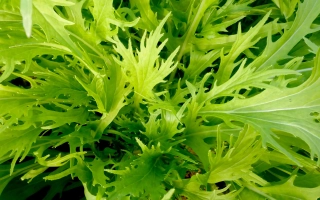
TsKHA 2 Chinese cabbage is a mid-season variety intended for greenhouse cultivation, which allows for an optimal temperature regime within 15–17°C for successful plant growth and development. This variety is characterized by a tall plant with large, elongated-oval to backward egg-shaped light green leaves with a weak waxy coating and a repeatedly lobed, wavy edge. The head of TsKHA 2 is light green in color, loose in structure, with a weight that varies depending on the growing region, ensuring a commercial yield ranging from 4.4 to 7.6 kg per square meter.
Growing Chinese cabbage requires regular watering, fertilization, and soil loosening to maintain fertility and optimal growth conditions. For sowing, it is recommended to use selected and treated seeds, and to grow seedlings in open or greenhouse nurseries on fertile plots with a southern or south-eastern slope. Adding lime to acidic soils and fertilizers such as ammonium nitrate, superphosphate, and potassium chloride contributes to improved soil quality and increased yield. Mid-season varieties, including TsKHA 2, are planted in open ground after 35-40 days of growth, and planting should be completed by mid-June.
Chinese cabbage TsKHA 2 is valued for its delicate taste and high vitamin C content, making it in demand on vegetable markets and in retail trade. The harvest can be collected 30–60 days after planting, which allows this variety to be used for winter-spring turnover in greenhouses. Due to its characteristics and adaptability, the TsKHA 2 variety is an excellent choice for cultivation in both industrial and private enterprises.
Growing Chinese cabbage requires regular watering, fertilization, and soil loosening to maintain fertility and optimal growth conditions. For sowing, it is recommended to use selected and treated seeds, and to grow seedlings in open or greenhouse nurseries on fertile plots with a southern or south-eastern slope. Adding lime to acidic soils and fertilizers such as ammonium nitrate, superphosphate, and potassium chloride contributes to improved soil quality and increased yield. Mid-season varieties, including TsKHA 2, are planted in open ground after 35-40 days of growth, and planting should be completed by mid-June.
Chinese cabbage TsKHA 2 is valued for its delicate taste and high vitamin C content, making it in demand on vegetable markets and in retail trade. The harvest can be collected 30–60 days after planting, which allows this variety to be used for winter-spring turnover in greenhouses. Due to its characteristics and adaptability, the TsKHA 2 variety is an excellent choice for cultivation in both industrial and private enterprises.
Crop & resistance
Crop
Specifications hover over for a hint about the specification
| Plant Type | |
|---|---|
|
Direction
Direction
Existing varieties and types of cabbage are grown for fresh consumption, long-term storage, and technical processing. |
|
|
Maturation (seedlings)
Maturation (seedlings)
By the length of the vegetation period, cabbage varieties are conditionally divided into three maturity groups: early maturing (100 — 120 days), mid-season maturing (120 — 150 days), and late maturing (more than 150 days). When sowing cabbage seeds in March — April, cabbage seedl... |
30-40 days |
|
Cabbage head; mass
Cabbage head; mass
The mass of the cabbage head depends on the variety characteristics and cultivation techniques. It can reach 10 kg and even more. |
4.0-8.0 kg |
| Registration year | 1991 |
| Catalog | Catalog → Cabbage |
| Manufacturer | UNP "Vegetable OS named after V.I. Edelstein" |
| Legal data |
Show · 10
|
| Country | Russia |
Store offers
Prices are updated on loadLoading offers…
Aggregator catalog: prices are collected automatically from store websites, normalized by AI and converted at the current exchange rate. Before ordering, confirm the price and availability on the store's website. This block is not indexed by search engines — the data is loaded after the page opens.
Not yet комментариев. Be the first!
Alternatives
Cabbage seeds · similar varieties


See also
Often considered together with this variety






Recently viewed
Products you’ve viewed on this site
Reviews · 0