
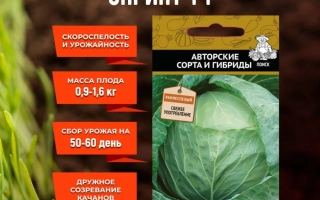


SKU #61967
·
55 views
Cabbage PIZHON
Cabbage
User rating
0 votes0% positive reviews
No ratings yet — be the first.
Plant Type
Decorative Cabbage
Direction
Fresh Market
Maturation (seedlings)
60-70 days
Head / head; color
Dark Green
Store offers · 3 from 3 stores
Prices are updated on loadLoading offers…
Available at: Цветок Шоп · Геліос · Procvetok · СеДеК
Aggregator catalog: prices are collected automatically from store websites, normalized by AI and converted at the current exchange rate. Before ordering, confirm the price and availability on the store's website. This block is not indexed by search engines — the data is loaded after the page opens.
About product

A striking ornamental plant with a fast maturity cycle for professional landscape design.
Plant Type
Decorative Cabbage
Direction
Fresh Market
Maturation (seedlings)
60-70 days
Head / head; color
Dark Green
Description
Engineering approach to aesthetics: ornamental kale "Pizhon"
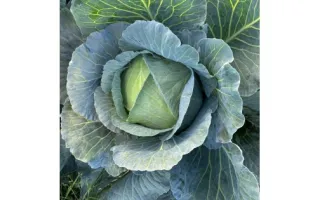
The ornamental kale variety "Pizhon," developed by the Federal Scientific Center for Vegetable Growing, represents a shift from agricultural utility to landscape design. Technically, this variety is a compact plant that, within a 60-70 day growing cycle, forms a dense rosette of leaves that visually mimics a classic cabbage head.
Morphological features and cultivation
- Maturation cycle: The short vegetation period (60-70 days from transplanting) allows for both early summer and autumn planting, maintaining high ornamental value until the first frosts.
- Rosette architecture: Unlike edible hybrids, the selection process here focused on leaf density and color saturation. The dark green shade of the leaf blades provides a strong visual contrast, making it suitable for mixed borders and container gardening.
- Purpose: This variety is tailored for the ornamental plant market. Its architectural structure enables the creation of complex, temperature-resistant compositions during the autumn season.
The practical value of "Pizhon" lies in the balance between growth predictability and resilience to standard Brassica oleracea growing conditions. The plant does not require complex maintenance; however, precise irrigation and fertilization are critical during the rosette formation phase to ensure the plant meets its 60-70 day maturation target. Thanks to the selective breeding work conducted by Maria Ivanova and Vyacheslav Ludilov, the variety maintains strong trait stability, setting it apart from many standard F1 market hybrids.
Crop & resistance
Crop
Specifications hover over for a hint about the specification
| Plant Type | |
|---|---|
|
Direction
Direction
Existing varieties and types of cabbage are grown for fresh consumption, long-term storage, and technical processing. |
|
|
Maturation (seedlings)
Maturation (seedlings)
By the length of the vegetation period, cabbage varieties are conditionally divided into three maturity groups: early maturing (100 — 120 days), mid-season maturing (120 — 150 days), and late maturing (more than 150 days). When sowing cabbage seeds in March — April, cabbage seedl... |
60-70 days |
|
Head / head; color
Head / head; color
The color of the head / head depends on the genetic characteristics of the specific cabbage variety. It can vary from light green to dark purple. |
|
| Registration year | 2007 |
| Catalog | Catalog → Cabbage |
| Legal data |
Show · 5
|
| Country | Russia |
Not yet комментариев. Be the first!
Alternatives
Cabbage seeds · similar varieties


See also
Often considered together with this variety





Recently viewed
Products you’ve viewed on this site
Reviews · 0