

SKU #37872
·
56 views
Barley Rosava
Barley
Prices in stores
from10.48 €per 1 kg
pack from 419.23 € per 40 kg
1 offer from 1 store
Plant Type
Winter Barley, Spring barley
Vegetation Period (Maturity)
90-100 days
Grain: mass 1.000seeds
40-42 grams
Registration year
1988
Your mark
0 votes
0% positive ratings
Store offers · 1 from 1 store
1 offer in 1 store — from 10.48 € per 1 kg.
Available at: Агрозахист
Prices are collected automatically from store websites and converted at the current exchange rate. Check the price and availability on the store website before ordering.
Description
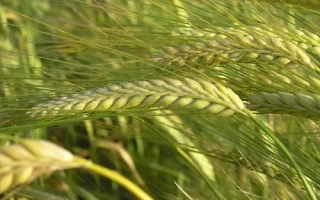
The barley variety Rosava is a medium-maturing type intended for grain production. It is distinguished by high adaptability to climatic conditions of the Steppe and Forest-Steppe regions, making it popular in these areas. Plants reach a height of 90–110 cm, have a semi-erect bush, and feature dark green, relatively wide leaves with a slight waxy coating during tillering. The spikes are of medium density, with 10–11 nodes per 4 cm, having nearly rectangular shapes that transition to rhomboid at the upper part. The spike color is bright straw-yellow, with long, serrated, spreading, slender, and elastic bracts. The barley grains are medium-sized, elongated, and bright yellow. The 1000-seed weight is approximately 40 grams. The variety shows good tillering when sown late in autumn or early spring, ensuring stable plant development. Rosava is not overly demanding in terms of agronomy, but seed treatment prior to sowing is mandatory for disease protection. The variety exhibits good cold and drought resistance, enabling successful cultivation under various climatic conditions. Despite its advantages, it has certain drawbacks, including insufficient resistance to lodging and susceptibility to fungal diseases. Nevertheless, its high yield potential under favorable conditions—up to 80–90 centners per hectare—makes Rosava an attractive choice for agricultural production. This barley is suitable for both winter and spring cultivation, expanding its application in agronomy.
Video · 1 video
Suggest a video →Crop & resistance
Crop
Specifications
| Plant Type | |
|---|---|
| Vegetation Period (Maturity) | 90-100 days |
| Grain: mass 1.000seeds | 40-42 grams |
| Registration year | 1988 |
| Catalog | Catalog → Barley |
| Legal data |
Show · 1
|
| Country | Ukraine |
No reviews yet. Be the first to share your experience.
Alternatives
Barley seeds · similar varieties



See also
Often considered together with this variety







Recently viewed
Products you’ve viewed on this site
Reviews