


SKU #60242
·
57 views
Belarusian Sweet
Apple
User rating
0 votes0% positive reviews
No ratings yet — be the first.
Type of Sort
Winter Apple Variety
Tree; Growth Power
Medium-height
Tree; Canopy Shape
Round Canopy
Fruit; Fruit Shape
Round, Slightly Ribbed
Store offers · 7 from 3 stores
Prices are updated on loadLoading offers…
Available at: 1sad · AgronomVIP · Гарденмарт · Procvetok · Интернет магазин садовых растений Все Сорта
Aggregator catalog: prices are collected automatically from store websites, normalized by AI and converted at the current exchange rate. Before ordering, confirm the price and availability on the store's website. This block is not indexed by search engines — the data is loaded after the page opens.
About product

The 'Belarusian Sweet' apple is a winter variety developed at the Fruit Growing Institute of the National Academy of Sciences of Belarus. This variety features medium-sized, fast-growing trees with round, sparse crowns and mixed fruiting habits, predominantly ring-bearing. Branches are sparsely arranged, diverging at angles close to 90 degrees, with downward-pointing tips. The trunk bark is smooth…
Type of Sort
Winter Apple Variety
Tree; Growth Power
Medium-height
Tree; Canopy Shape
Round Canopy
Fruit; Fruit Shape
Round, Slightly Ribbed
Description
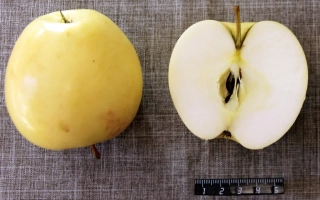
The 'Belarusian Sweet' apple is a winter variety developed at the Fruit Growing Institute of the National Academy of Sciences of Belarus. This variety features medium-sized, fast-growing trees with round, sparse crowns and mixed fruiting habits, predominantly ring-bearing. Branches are sparsely arranged, diverging at angles close to 90 degrees, with downward-pointing tips. The trunk bark is smooth and grey. Fruits are large, weighing around 180 grams, with a regular round shape, bright red blush, slightly ribbed, and uniform. The apples have a sweet and pleasant taste, making them attractive to consumers. The variety is characterized by high yield and stable fruiting, entering bearing age by the second or third year after planting. Apples ripen in mid- or late September, with a consumer period lasting from October to early February. The fruits store well and have good transportability, allowing their use primarily in fresh form. The variety is distinguished by high winter hardiness and resistance to scab due to the presence of the Vf (Rvi6) gene, as well as moderate resistance to spring frosts. 'Belarusian Sweet' is unpretentious in care and adapts well to various climatic conditions, making it suitable for both private and commercial cultivation. Despite being self-sterile, the variety winters well and does not require special attention to agronomy. The apple tree is widely spread in the gardens of Belarus and Russia, confirming its popularity and reliability as a variety with excellent consumer and agronomic characteristics.
Video · 10 videos
Suggest a video →Crop & resistance
Disease resistance
Specifications
| Type of Sort | |
|---|---|
| Tree; Growth Power | |
| Tree; Canopy Shape | |
| Fruit; Fruit Shape | |
| Fruit; Fruit mass | 150-200 grams |
| Fruit; Lying | 5-6 months |
| Cold Resistance | |
| Registration year | 2006 |
| Catalog | Catalog → Apple |
| Legal data |
Show · 6
|
| Country | Russia |
Not yet комментариев. Be the first!
Alternatives
Apple saplings · similar varieties




See also
Often considered together with this variety



Recently viewed
Products you’ve viewed on this site
Reviews · 0