


SKU #60008
·
41 views
PIONER SEVERA
Apple
ФГБНУ Федеральный Аграрный Научный Центр Северо-востока имени Н.В. РудницкогоUser rating
0 votes0% positive reviews
No ratings yet — be the first.
Type of Sort
Summer apple variety
Tree; Growth Power
Medium-height
Tree; Canopy Shape
Round Canopy
Fruit; Fruit Shape
Flat-round
Prices in stores
from4.31 €per seedling
pack from 2.55 € per pack
3 offers from 3 stores
Store offers · 3 from 3 stores
Prices are updated on loadLoading offers…
Available at: Sadokshop · Сади Буковини · Семена Буковины
Aggregator catalog: prices are collected automatically from store websites, normalized by AI and converted at the current exchange rate. Before ordering, confirm the price and availability on the store's website. This block is not indexed by search engines — the data is loaded after the page opens.
About product

The Pioneer of the North apple variety is a medium-sized tree with a rounded canopy of moderate density. Its shoots are thick, straight, rounded, brownish-red in color, and almost hairless. The leaves are large, elongated, dark green with a glossy surface. This variety was bred in 1937 at the Zonal Institute of Agriculture of the Far East by crossing Red Chinese with Candilly Chinese.The fruits of…
Type of Sort
Summer apple variety
Tree; Growth Power
Medium-height
Tree; Canopy Shape
Round Canopy
Fruit; Fruit Shape
Flat-round
Description
The Pioneer of the North apple variety is a medium-sized tree with a rounded canopy of moderate density. Its shoots are thick, straight, rounded, brownish-red in color, and almost hairless. The leaves are large, elongated, dark green with a glossy surface. This variety was bred in 1937 at the Zonal Institute of Agriculture of the Far East by crossing Red Chinese with Candilly Chinese.
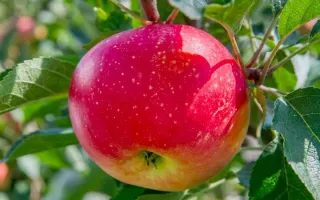
The fruits of the Pioneer of the North apple tree have a summer ripening period and are distinguished by their round-flat regular shape. Their coloration is greenish-yellow with dark red interrupted stripes on a blurred blush background. Apple mass varies from 50 to 70 grams, usually around 60 grams. The flesh is white, sometimes with red veins, tender, finely granular, very juicy and aromatic. Sugar content in the fruits is about 10.46%. When overripe, the flesh becomes mealy. The fruits store well for up to two weeks.
The variety is characterized by high yield—on average, about 30 kg of apples are obtained from one tree. The apple tree is early-bearing, beginning to bear fruit as early as the fourth year after planting. It has high frost resistance, withstanding temperatures down to -43°C, which makes it especially valuable for cultivation in northern and temperate latitudes. The variety is adapted to various climatic conditions and requires minimal care, allowing for successful cultivation in gardens, vegetable gardens, and summer cottages.
The fruits of the Pioneer of the North apple tree have a summer ripening period and are distinguished by their round-flat regular shape. Their coloration is greenish-yellow with dark red interrupted stripes on a blurred blush background. Apple mass varies from 50 to 70 grams, usually around 60 grams. The flesh is white, sometimes with red veins, tender, finely granular, very juicy and aromatic. Sugar content in the fruits is about 10.46%. When overripe, the flesh becomes mealy. The fruits store well for up to two weeks.
The variety is characterized by high yield—on average, about 30 kg of apples are obtained from one tree. The apple tree is early-bearing, beginning to bear fruit as early as the fourth year after planting. It has high frost resistance, withstanding temperatures down to -43°C, which makes it especially valuable for cultivation in northern and temperate latitudes. The variety is adapted to various climatic conditions and requires minimal care, allowing for successful cultivation in gardens, vegetable gardens, and summer cottages.
Crop & resistance
Disease resistance
Specifications hover over for a hint about the specification
| Type of Sort | |
|---|---|
| Tree; Growth Power | |
| Tree; Canopy Shape | |
| Fruit; Fruit Shape | |
| Fruit; Fruit mass | 50-100 grams |
| Fruit; Fruit Color (Base Color) | |
| Fruit; Blush (Blush Color) | |
|
Fruit; flesh color
Fruit; flesh color
Color of the fruit flesh. There are red, pink, yellow, and brown colors. |
|
| Fruit; Lying | Up to 1 month |
| Cold Resistance | |
| Registration year | 1959 |
| Catalog | Catalog → Apple |
| Manufacturer | ФГБНУ Федеральный Аграрный Научный Центр Северо-востока имени Н.В. Рудницкого |
| Country | Russia |
Not yet комментариев. Be the first!
Alternatives
Apple saplings · similar varieties



See also
Often considered together with this variety





Antratsit
Фгбоу Во Кубанский Государственный Аграрный Университет Имени И.Т.Трубилина
045 1 offer
6.13 € ≈ 317 ₴

Tsitrin
Фгбоу Во Кубанский Государственный Аграрный Университет Имени И.Т.Трубилина
045 1 offer
2.89 € ≈ 149 ₴
Recently viewed
Products you’ve viewed on this site
Reviews · 0