Actinidia is a dioecious climbing plant that is usually grown in pairs to ensure sexual reproduction. The "Original" variety is a hybrid plant that grows successfully on household plots in the central region and can reach a height of up to 4–8 m (up to 30–50 m in its native habitat). Young shoots have a brownish tint, while older ones are light grey. The plant tolerates low temperatures well, withstanding frosts of approximately -28 °C.
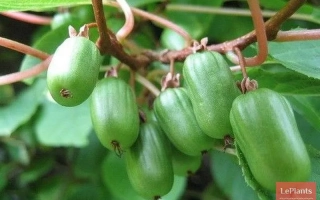
Actinidia fruits are long cylindrical berries weighing 11–14 g, with green skin and flesh without a visible blush. They have a sour-sweet taste with a pineapple aroma and can ripen from early September to late autumn, allowing for harvesting over a long period. One adult bush can yield up to 10 kg of fruit, and the berries can be eaten fresh or dried, pickled, cooked (in jam, jelly, or liqueurs), or used to make liqueurs.
Actinidia is valued not only for its taste but also for its high content of vitamins and trace elements. The berries contain 80–100 mg % of vitamin C, 55 % of active substances, 0.28 mg % of carotene, as well as potassium, zinc, sodium, pectins, and sugars. Due to its high level of vitamin E, it is especially beneficial for smokers, as this vitamin is destroyed by cigarette smoke. The berries are low-calorie and can be used in dietary feeding. During processing (jam, juice), the vitamin C content hardly decreases, so even a small amount of the product provides the daily need for ascorbic acid.
In medical studies, actinidia has shown beneficial effects on the cardiovascular system: after consuming the fruits, blood vessels dilate and blood pressure drops. Berries are also used for colds, cavities, gingivitis, and other oral diseases. The extract contains a substance capable of eliminating radionuclides from the body, and the juice helps rehabilitate patients after prolonged use of antibiotics.
To grow actinidia, it is necessary to ensure moist, loose soil with weak acidity and sufficient irrigation. The plant grows easily in various climatic zones, including temperate and even colder regions, thanks to its frost resistance. Thanks to its decorative appearance and fruiting, actinidia becomes a popular element of household gardens, where it can wrap around arches, walls, or gazebos, creating a picturesque landscape.