The 'Magistr' apricot variety was developed at the Nikitsky Botanical Garden through the selection of seedlings from open-pollination of the 'Vympel' variety. This variety is adapted to the North Caucasus region and is characterized by a medium-sized tree with a spreading crown of medium density. The tree begins to bear fruit on the 4th-5th year after planting, mainly on side branches and spurs. In young age, annual shortening and thinning pruning is recommended for crown formation. The bark on the trunk and main branches has a grey-brown scaly appearance, while shoots are of medium length and thickness, with a red-brown color on the sunlit side.
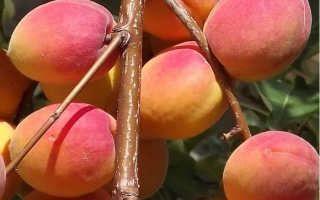
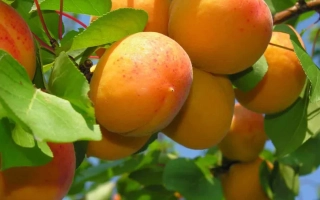
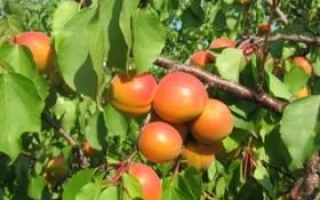
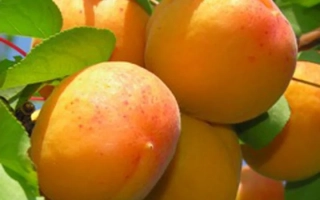
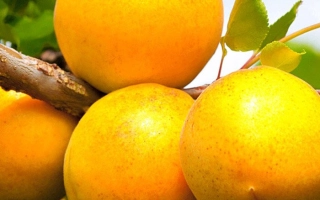
The fruits of the 'Magistr' apricot are large, weighing about 65 grams, round in shape with a blunt apex. The skin is yellow-orange with a crimson blush, covered with weak fuzz and of medium density. The flesh is light orange, juicy, fused-fibrous with a sour-sweet taste, which received a high tasting evaluation. The kernel is medium-sized, oval, separates well from the flesh, and the seed is sweet. The fruits contain a significant amount of dry matter, sugars, vitamin C, and carotene, making them healthy and tasty. The variety belongs to mid-late maturity, with fruits ripening in the second-third decade of July.
The 'Magistr' apricot has high and regular yield, reaching 150 centners per hectare, as well as good winter hardiness of flowering buds. The variety is self-fertile, does not require planting additional pollinators, which simplifies its cultivation. It is resistant to fungal diseases, including moniliosis, which reduces the need for frequent application of protective agents. Thanks to these qualities and the universal purpose of the fruits, the 'Magistr' apricot is suitable for both experienced and novice gardeners, is successfully grown in open ground, and demonstrates stable quality and yield indicators.