


SKU #68461
·
51 views
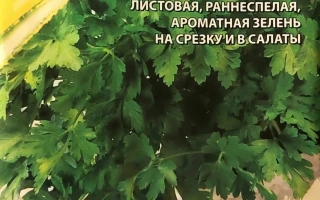
Parsley COMMON LEAF
Parsley
Nauchno-proizvodstvennaya firma Rossiyskiye SemenaPrices in stores
from3.13 €per 1 kg
pack from 0.12 € per 2 g
30 offers from 20 stores
Direction
Leaf
Registration year
1950
Your mark
0 votes
0% positive ratings
Store offers · 30 from 20 stores
30 offers in 20 stores — from 3.13 € per 1 kg.
Available at: agronomcity-ru · Agroteka · Сад Огород · All-market · Baza Lubny · Еліт насіння · gradinamax-ua · Greendecor · grigorev-semena-ru · remontdoma24-ru · sadim-by · sivok-com-ua · sortsem-ru · staryjoskol-poryadok-ru · svmopt-ru · xn-80aaa0cvac-xn-34-8kcm9cl-xn-p1ai
Prices are collected automatically from store websites and converted at the current exchange rate. Check the price and availability on the store website before ordering.
About product
A stable variety with a high capacity for foliage regeneration after cutting.
Description
Genetic Potential of the "Ordinary Leafy" Variety
The "Ordinary Leafy" parsley variety from NPF "Russian Seeds" is a prime example of breeding focused on high vegetative activity. Originators (Intersemya and Heterosis Breeding) have engineered this genotype for resilience against adverse temperature factors, allowing the crop to rapidly regenerate foliage after harvesting.
Agrotechnical Specifications
- Crop Type: Leafy parsley. High leaf density ensures a marketable appearance for bunch produce.
- Regeneration: The biological potential of the variety is oriented toward intensive regrowth, which is critical for achieving multiple harvests within a single season.
- Cultivation Technology: The variety is adapted to climatic conditions, showing stability in both open-field production and greenhouse environments.
A key advantage of this variety is its intense green color and potent aroma, driven by high essential oil content. Selective breeding efforts focused on bolting resistance, which extends the active growing season without compromising leaf quality. In practice, this ensures a predictable interval between sowing and the first cut, maintaining the marketability of the rosette even during intermittent dry spells.
Video · 7 videos
Suggest a video →Specifications
| Direction | |
|---|---|
| Registration year | 1950 |
| Catalog | Catalog → Parsley |
| Manufacturer | Nauchno-proizvodstvennaya firma Rossiyskiye Semena |
| Legal data |
Show · 11
|
| Country | Russia |
No reviews yet. Be the first to share your experience.
Alternatives
Parsley seeds · similar varieties





See also
Often considered together with this variety




Recently viewed
Products you’ve viewed on this site
Reviews