


SKU #61043
·
35 views
1008-1
Sugar Beet
User rating
0 votes0% positive reviews
No ratings yet — be the first.
Sugar Content
18-19%
Registration year
2005
About product

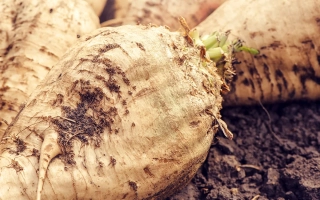
Delivers a sugar content of 18-19%, making it a preferred choice for producers focused on raw material quality.
Sugar Content
18-19%
Registration year
2005
Description
Stable sugar content as a key advantage
In the segment of sugar beet breeding, the "1008-1" hybrid occupies a niche of specialized raw materials focused on high sucrose concentration. Developed by a group of breeders led by S. I. Skachkov and V. A. Nuzhdina, this product is the result of many years of work aimed at stabilizing genetic potential within continental climate conditions.
Technological potential and economic return
The key characteristic that sets "1008-1" apart from its competitors is its stable sugar content, ranging from 18% to 19%. Given the current industry realities where processing plants impose strict quality requirements on root crops, this indicator allows farmers to target higher purchasing coefficients.
Strengths and Weaknesses
- Strength: High sugar accumulation intensity, which is critical for companies operating under contracts where the price is tied to sugar yield rather than just total harvest mass.
- Considerations: Like most specialized hybrids, it requires strict adherence to agronomic practices. Excessive nitrogen fertilization can reduce the pure sugar yield during processing, so cultivation requires precise fertilizer management.
This variety/hybrid is optimal for operations specializing in intensive beet farming that have established distribution channels to processing facilities equipped with modern, differentiated intake technology. It is a logical choice for growers shifting their focus from bulk yield to raw material quality metrics.
Crop & resistance
Crop
Specifications
| Sugar Content | 18-19% |
|---|---|
| Registration year | 2005 |
| Catalog | Catalog → Sugar Beet |
| Legal data |
Show · 9
|
| Country | Russia |
Store offers
Prices are updated on loadLoading offers…
Aggregator catalog: prices are collected automatically from store websites, normalized by AI and converted at the current exchange rate. Before ordering, confirm the price and availability on the store's website. This block is not indexed by search engines — the data is loaded after the page opens.
Not yet комментариев. Be the first!
Alternatives
Sugar beet seeds · similar varieties




See also
Often considered together with this variety






Recently viewed
Products you’ve viewed on this site
Reviews · 0