
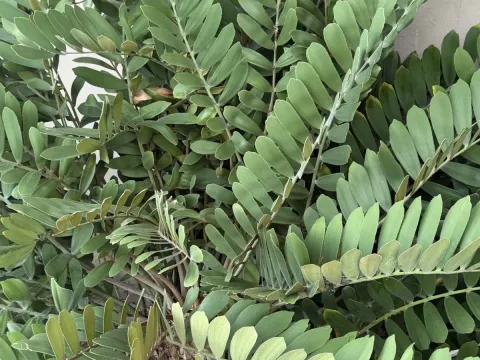
Zamia
Zamia
Zamia is a genus of cycads belonging to the Zamiaceae family. These plants are known for their ancient lineage and distinctive architectural growth form, often featuring a stout underground or aerial stem called a caudex.
What the section contains
 Coontie
Zamia integrifolia
Coontie
Zamia integrifolia
 Florida arrowroot
Zamia floridana
Florida arrowroot
Zamia floridana
 Narrow-leaf zamia
Zamia angustifolia
Narrow-leaf zamia
Zamia angustifolia
 Zamia fischeri
Zamia fischeri
Zamia fischeri
 Zamia furfuracea
Zamia furfuracea
Zamia furfuracea
 Zamia kickxii
Zamia kickxii
Zamia kickxii
 Zamia loddigesii
Zamia loddigesii
Zamia loddigesii
 Zamia neurophyllidia
Zamia neurophyllidia
Zamia neurophyllidia
 Zamia pumila
Zamia pygmaea
Zamia pygmaea
Zamia pumila
Zamia pumila
Zamia pygmaea
Zamia pygmaea
 Zamia restrepoi
Zamia restrepoi
Zamia restrepoi
 Zamia soconuscensis
Zamia soconuscensis
Zamia soconuscensis
Zamia
The native distribution of Zamia spans across tropical and subtropical regions of the Americas, including Florida, Mexico, and the Caribbean. They have adapted to various soil types, typically preferring well-draining, sandy or rocky substrates.
In terms of climatic requirements, Zamia thrives in warm temperatures, ideally between 18 and 25 degrees Celsius. They are intolerant of freezing conditions and require protection from intense, direct sunlight to prevent leaf scorch in container environments.
Proper agronomic management involves a deep irrigation strategy that allows the substrate to dry significantly before the next watering session. This prevents the accumulation of excess moisture, which is the leading cause of plant failure in this genus.
Horticultural use is primarily focused on ornamental landscape design and as a premium decorative plant. Due to their slow growth rate and unique aesthetic, they are highly valued for interior and exterior design in frost-free climate zones.
Common pests affecting Zamia include mealybugs, scale insects, and sometimes spider mites. These pests typically cluster on the undersides of the leaves or in the protected gaps between leaflets, necessitating targeted systemic insecticide treatments.
Root rot and crown rot represent the most significant pathological threats to this crop. These diseases are almost exclusively linked to poor irrigation practices or inadequate drainage, leading to the rapid decay of the vascular tissues in the caudex.
- Monitor for yellowing of lower leaves.
- Inspect new growth for signs of infestation.
- Maintain adequate soil porosity.
- Isolate infected plants immediately.
- Use sterile tools for any necessary pruning.