
Zamia furfuracea
Zamia furfuracea
Description
Growing requirements
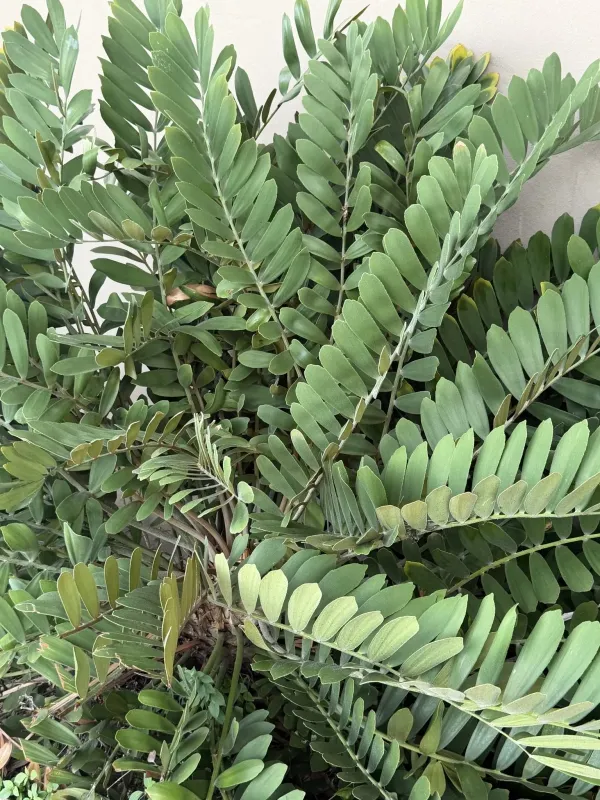
Zamia furfuracea, commonly known as the cardboard palm, belongs to the Zamiaceae family. It is a slow-growing cycad native to the coastal regions of Veracruz, Mexico, where it naturally thrives in sandy, well-drained soils and limestone outcrops.
The plant features a stout, subterranean trunk and a rosette of stiff, leathery fronds. The leaves are covered in distinct trichomes, giving them a fuzzy, cardboard-like texture that serves as a protective adaptation against intense sunlight and heat.
Climate requirements for this culture are centered on tropical conditions. It requires bright, indirect light and thrives in temperatures ranging from 20°C to 28°C. It is sensitive to frost and should be protected when temperatures drop below 10°C.
The soil must provide exceptional drainage, as the plant is highly susceptible to root decay. A mixture of peat, coarse sand, and perlite is recommended for container cultivation to simulate its native sandy habitat.
Agrotechnical management involves careful hydration. Water should be applied only when the top third of the soil is completely dry. During the dormant winter phase, watering should be significantly reduced to prevent physiological stress.
Main diseases and pests
Scale insects are the most persistent pest for Zamia furfuracea. These small insects attach themselves to the undersides of leaves and stems, sucking the plant's sap and weakening its structure over time.
Mealybugs can also infest the plant, hiding in the crotches of the leaves and protected areas. Manual removal using cotton swabs dipped in alcohol combined with systemic insecticide treatments is usually required for control.
Root rot is the most lethal condition for this species, caused almost exclusively by overwatering or compacted, waterlogged soil. Once root rot sets in, the plant loses its ability to absorb nutrients, leading to rapid wilting.
Fungal leaf spot can develop in environments with poor air circulation or high humidity levels. Keeping the foliage dry during evening hours and ensuring good airflow around the plant are essential prevention strategies.
Spider mites can occur in very dry indoor settings. Regular misting or increasing ambient humidity, alongside visual monitoring of the leaf undersides, helps keep the population in check and maintains plant health.