
Florida arrowroot
Zamia floridana
Description
Growing requirements
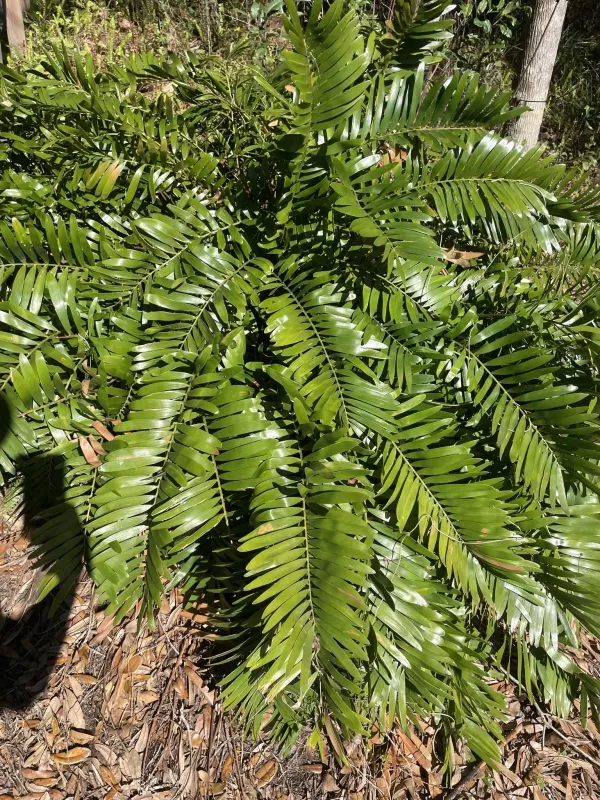
Zamia floridana, commonly known as Florida arrowroot, is a distinctive member of the Zamiaceae family. This prehistoric-looking plant is a cycad, characterized by a slow growth rate and a robust, tuberous root system adapted to dry conditions.
Native to the Florida peninsula, it thrives in sandy, well-draining soils. Historically, the plant was utilized as a local source of starch, though its current cultivation is primarily ornamental due to the slow growth cycle.
Successful cultivation requires bright, filtered light. While the plant can tolerate some morning sun, exposure to intense afternoon sunlight can lead to leaf yellowing and structural damage to the pinnate fronds.
The soil must be slightly acidic to neutral and highly porous. Professional growers suggest using a mix of peat moss, coarse sand, and pumice to ensure that irrigation water drains rapidly, preventing root suffocation.
Temperature management is critical: the plant performs best in a range of 20°C to 28°C. It is intolerant of severe frost, so in cooler climates, it must be protected in climate-controlled greenhouses during the winter months.
Main diseases and pests
The most significant threat to Zamia floridana is root rot, primarily caused by waterlogged soil conditions. This fungal infection often leads to the rapid decay of the tuber, which is usually fatal to the specimen.
Scale insects are frequent pests that infest the fronds. These small insects form protective covers, making manual removal or specific systemic insecticide treatments necessary for total population control.
Mealybugs can often be found in the crown of the plant where new fronds emerge. Their presence leads to stunted growth and the potential for secondary fungal infections in the damaged tissue.
Spider mites are another common concern, especially in environments with low humidity. They weaken the plant by extracting cell sap, causing the leaves to develop a mottled, pale appearance before dropping.
Regular sanitation of tools and controlled watering practices are the cornerstones of plant health. If an infestation occurs, treating with horticultural oils or insecticidal soaps can be effective if applied consistently.