
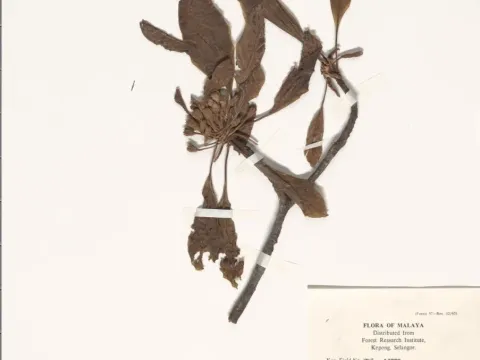
Palaquium stellatum
Palaquium stellatum
Palaquium stellatum is a significant species belonging to the Sapotaceae family. Native to the humid tropical forests of Southeast Asia, this tree serves as a vital component of the local ecosystem, providing shelter and nutrients.
What the section contains
Palaquium stellatum
The climate requirements for this species are strict, demanding high annual rainfall and consistent, warm temperatures throughout the year. It does not tolerate prolonged dry periods or significant temperature fluctuations, which can hinder its development.
Regarding soil conditions, Palaquium stellatum thrives in deep, well-drained soils that are rich in organic matter. Proper drainage is critical, as waterlogged conditions can lead to root rot and other physiological stressors that impact the tree's health.
Agrotechnical management involves maintaining a clean environment around young trees to reduce competition for nutrients. As the trees mature, their ability to form a dense canopy helps suppress undergrowth and protects the integrity of the forest floor.
Botanically, the tree is noted for its distinctive leaf structure and the presence of milky latex within its vascular system, a characteristic common to many members of the Sapotaceae family.
The primary economic output of Palaquium stellatum is high-quality timber, which is valued for its strength and resistance to decay. Harvesting is conducted through selective logging practices to ensure the long-term sustainability of the forest stand.
The tree is historically associated with the production of gutta-percha, a natural latex harvested from the bark. While modern synthetic alternatives exist, there remains an interest in sustainable wild harvesting for niche industrial applications.
Seed collection requires precise timing, as the viability of the seeds decreases rapidly after detachment from the parent plant. Fresh seeds should be sown promptly to ensure successful germination and the establishment of new seedlings.
Phytosanitary monitoring is essential prior to any harvesting operation. Managers must assess the trees for signs of pest infestation or disease to ensure that only healthy biomass is processed for industrial or commercial use.
Post-harvest processing involves controlled drying and curing of the timber to prevent warping or cracking. Adhering to these traditional drying techniques preserves the wood's structural integrity and aesthetic value.