
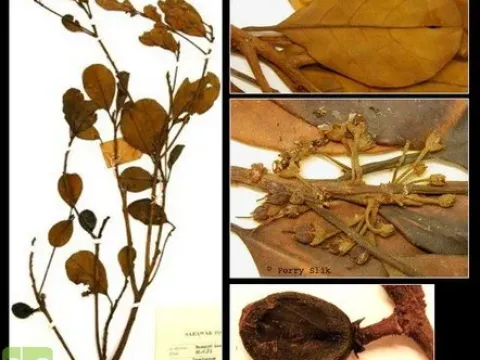
Palaquium walsurifolium
Palaquium walsurifolium
Palaquium walsurifolium is a prominent evergreen tree species belonging to the Sapotaceae family. It is natively distributed in the tropical rainforests of Southeast Asia, where it plays a significant role in the forest ecosystem structure.
What the section contains
Palaquium walsurifolium
Successful cultivation requires a tropical climate characterized by consistently high temperatures and abundant rainfall throughout the year. The species is highly sensitive to significant temperature drops or extended periods of drought.
The ideal soil conditions involve deep, nutrient-rich substrates with excellent drainage capacity. While the plant thrives in humid environments, waterlogged soil can be detrimental to its root system, potentially causing decay.
Agrotechnical management includes providing shelter for young plants, as they are susceptible to damage from strong winds and intense direct sunlight. Weed control is essential during the early stages of establishment to prevent resource competition.
Growth rates are relatively slow, necessitating long-term land management planning. Establishing plantations requires a deep understanding of tropical silviculture to ensure the trees reach their maturity safely.
The main commercial applications for this species include the harvesting of high-quality timber and the collection of latex from the bark. The wood is prized for its durability, hardness, and resistance to environmental degradation.
Latex production efficiency is heavily dependent on the precision and frequency of tapping techniques applied to the tree bark. Proper training of personnel is necessary to minimize structural damage to the tree while maximizing output.
The volume of timber yield per hectare is influenced by spacing and plantation maintenance quality. Strategic forest management allows producers to optimize tree development for commercial extraction cycles.
Product quality depends on the tree's overall health and the absence of pathogens during its growth phase. Consistent monitoring of the plantation is vital for ensuring high-value raw material production.
Economic returns are realized over extended periods given the biological cycle of the tree. Consequently, it remains a specialized crop suitable for forestry enterprises focused on sustainable long-term development.
Fungal infections are among the most serious threats, especially in environments with high humidity. These pathogens can affect bark integrity and lead to internal decay, significantly reducing the wood's commercial value.
Stem borers and various coleopteran pests pose a major threat to the integrity of the tree trunk. By creating galleries in the wood, these pests disrupt the plant's vascular system and weaken its structural stability.
Defoliating insects, while typically less fatal than stem borers, can impact tree vigor by reducing its photosynthetic surface. Frequent monitoring is necessary to prevent mass infestations that could stunt growth.
Improper tapping or pruning can introduce harmful bacteria into the trunk. Strict sanitation protocols for all harvesting tools are mandatory to prevent the transmission of infections between trees.
- Regular phytosanitary inspections of all plantation areas.
- Immediate removal and disposal of infected wood matter.
- Strategic implementation of integrated pest management (IPM) practices.