
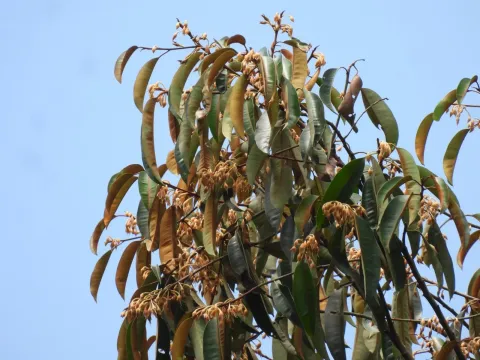
Payena
Payena
Propagation of the Payena genus in its natural environment occurs primarily through seeds. Seeds possess low viability if stored for long periods, so they are sown immediately after harvesting into prepared nursery beds or containers filled with a moist substrate.
What the section contains

Payena
The optimal time for germination coincides with the period preceding the intense monsoon rainy season. This timing allows young seedlings to establish roots and strengthen before the extreme humidity phase begins, ensuring high survival rates.
When cultivated in specialized forestry operations, a pre-germination method is used under controlled humidity and temperature conditions. Seedlings require shade, as direct tropical sunlight can burn the delicate leaves of young plants.
Transplanting to the permanent site is conducted when the seedling reaches a height of 30 to 50 centimeters. This is a critical stage requiring careful handling of the root system, which in Payena shows limited branching during the early growth stages.
Planting density is calculated based on the intended use: for latex production, trees are spaced further apart to allow easy access for tapping. In reforestation projects, closer spacing is permissible to encourage the formation of a dense forest canopy.
Payena belongs to the Sapotaceae family and consists of evergreen trees native to the tropical rainforests of Southeast Asia. These plants have extremely high requirements for air humidity and stable temperature regimes.
The crop prefers deep, well-drained alluvial soils rich in organic matter. Waterlogging in the root zone is fatal to the plant, making careful site selection based on groundwater levels and topography essential.
The plant is highly sensitive to sudden temperature fluctuations and direct exposure to desiccating winds. In their natural habitat, Payena trees occupy the understory layer, thus requiring moderate shade during the initial years of development.
Normal growth requires a mean annual temperature range of 24–28 degrees Celsius. The absence of a distinct dormant period allows the tree to accumulate biomass almost year-round, provided that soil moisture is sufficient.
Agronomic management includes regular weeding around the base of the tree in the first few years, as weeds compete aggressively for nutrients. As the tree matures, it forms a dense crown that naturally suppresses unwanted vegetation underneath.
The primary economic product obtained from Payena is latex containing gutta-percha. Latex yield depends directly on the tree's age, physiological condition, and the intensity of the trunk tapping process.
The extraction process resembles rubber harvesting: incisions are made on the bark, allowing the viscous latex to bleed out. Efficiency decreases with excessive tapping, so professional harvesters observe mandatory resting intervals to allow the tree's tissues to recover.
Payena wood also holds value, though it is less in demand compared to other tropical species. It possesses sufficient density and resistance to biological decay, making it suitable for local construction and furniture production.
Maximum gutta-percha yields are observed in trees aged 15 to 20 years. Older specimens can provide a stable supply of raw material, although the total volume of latex eventually stabilizes and begins to decline slowly as the tree ages.
The overall productivity of plantations is measured not only by latex volume but also by the wood biomass growth rate. Modern forest management methods allow for the integration of sustainable sap extraction with gradual selective logging.
Major threats to Payena include fungal bark infections, which can enter through mechanical wounds caused by tapping. Prevention necessitates the use of sterile tools and the timely application of protective sealants to wounds.
Pests, such as wood-boring beetle larvae, can cause significant damage to the wood by creating galleries under the bark. Regular monitoring of trunk conditions helps identify infestation spots early to prevent tree mortality.
The high humidity of tropical regions favors the development of mold fungi on leaves, which reduces photosynthetic activity. Agronomists recommend ensuring good air circulation in plantations by thinning out excessively dense stands.
Soil erosion on slopes is a significant risk factor, as the Payena root system requires stable ground. The use of cover crops helps protect the fertile topsoil layer from being washed away by heavy rainfall.
Biological threats also include specific species of ants and termites that may colonize weakened trees. Comprehensive plantation protection involves creating conditions unfavorable for the proliferation of these insects.
Latex harvesting is conducted during the dry season, as high humidity interferes with the coagulation and subsequent purification of gutta-percha. The best time for tapping is early morning when the laticifers are most active.
Harvesting equipment includes sharp knives that allow for the removal of a thin layer of bark without damaging the cambium. The depth of the incision is strictly regulated to prevent long healing times, which could become entry points for infections.
The collected latex is gathered in containers and subjected to primary processing, known as coagulation. The resulting block of gutta-percha must be cleaned of bark and wood fiber impurities to ensure high quality for market specifications.
When timber harvesting is required, it is carried out in accordance with forest recovery plans. Selective harvesting of mature trees allows for the maintenance of ecological balance while ensuring a sustainable latex supply over the long term.
Adherence to storage technologies for the final raw product is critical. Gutta-percha is sensitive to prolonged exposure to high temperatures and ultraviolet light, requiring storage in shaded, cool warehouses until it reaches the consumer.