
Kumquat
Fortunella margarita
Description
Growing requirements
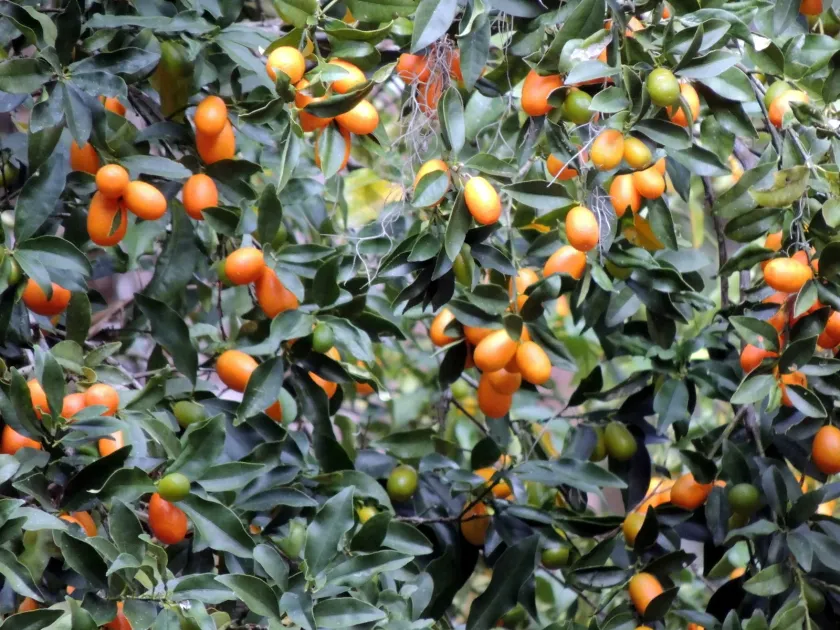
Fortunella margarita, commonly known as the Nagami kumquat, is a member of the Rutaceae family. This evergreen shrub is native to Southern China and is highly valued for its small, edible, orange-like fruits that can be consumed peel and all.
The plant thrives in full sun conditions, requiring at least 6 to 8 hours of direct light daily for optimal growth. If grown indoors, a spot near a sunny window or under supplementary grow lights is essential for the plant to remain healthy.
Soil quality is paramount; kumquats require a well-draining, slightly acidic potting mix with a pH between 5.5 and 6.5. A mix containing peat moss, perlite, and pine bark is often recommended to ensure good aeration for the roots.
Temperature management is critical for the species. It prefers a warm climate during the growing season, typically between 20°C and 28°C, and requires a cooler resting period during winter to initiate flower bud development.
Watering should be consistent; allow the top inch of soil to dry out before watering again. High humidity levels are beneficial, often requiring regular misting or the use of a humidity tray to prevent leaf drop and tip burn.
Yield
Productivity increases significantly once the tree establishes a strong root system, usually after 4 years of growth. Regular fertilization with a balanced citrus-specific fertilizer is necessary to support heavy fruit sets during the summer months.
The culinary versatility of the kumquat makes it a popular choice for home gardeners. Beyond fresh consumption, the fruits are frequently used in preserves, marmalades, and as a decorative ingredient in various gourmet recipes.
Main diseases and pests
The most common pests affecting Fortunella margarita are aphids, mealybugs, and scale insects. These pests can be managed by physical removal, insecticidal soaps, or neem oil applications when detected early.
Fungal issues, specifically root rot, are the most frequent health threats caused by poor drainage. Preventing saturated soil conditions is the best defense against these pathogens and ensures the long-term vitality of the tree.
Harvesting
Harvesting should be done when the fruits reach a deep orange color and are slightly soft to the touch. It is best to use shears to cut the fruit stem rather than pulling them off to avoid damaging the delicate branches.