
Fortunella crassifolia
Fortunella crassifolia
Description
Growing requirements
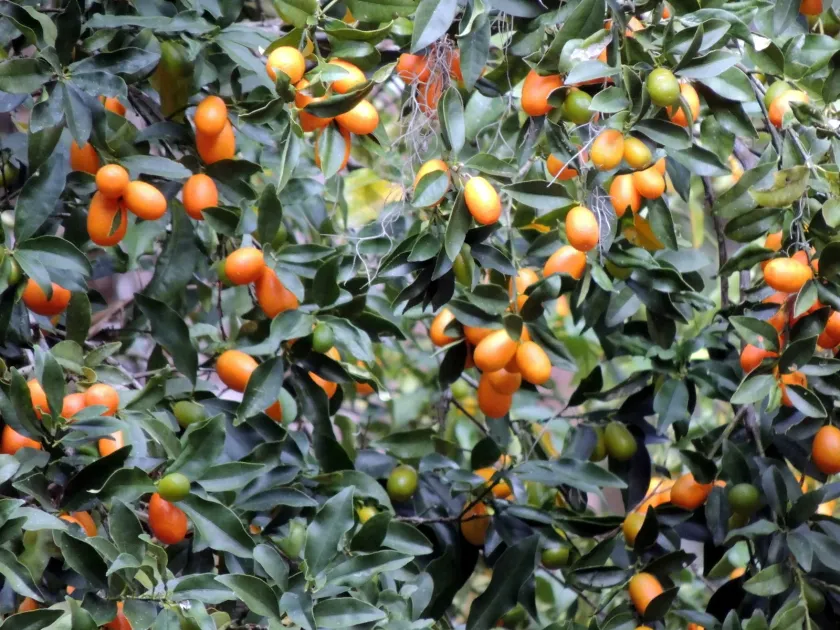
Fortunella crassifolia, commonly known as the Meiwa kumquat, is a compact evergreen shrub or small tree belonging to the Rutaceae family. It is prized for its ornamental value and its edible, sweet-skinned fruits.
Originating from East Asia, this plant thrives in subtropical climates. It requires significant warmth, high humidity, and protection from frost, making it ideal for temperate-zone greenhouses or conservatories.
The ideal soil for this species is well-draining, nutrient-rich, and slightly acidic, with a pH range between 5.5 and 6.5. Good aeration is essential to prevent root rot, which is a common issue in container gardening.
Light requirements are high; the plant needs at least 8 to 10 hours of bright, indirect sunlight daily. In indoor settings, high-intensity artificial lighting is recommended to maintain vigorous growth and fruit production.
Proper agronomic management involves regular watering when the top layer of soil dries out, combined with balanced liquid fertilization specifically formulated for citrus plants to support healthy foliage and fruit set.
Yield
The fruit of Fortunella crassifolia is round to oval, characterized by a thick, sweet rind and a tart, acidic pulp. Unlike many other citrus fruits, the entire fruit is meant to be eaten raw, skin and all.
These kumquats are extensively used in culinary applications, including the production of preserves, marmalades, candied fruits, and as a sophisticated garnish for salads and desserts.
Productivity is highly dependent on light exposure and pruning practices. When properly maintained, a healthy tree can yield a substantial amount of fruit, which often remains on the branches for several weeks.
The flowering period typically occurs in the summer, with fruit maturing slowly over several months. This long maturation period contributes to the plant’s year-round aesthetic appeal, as orange fruits contrast beautifully with dark green foliage.
Consistent pruning of dense internal branches helps improve airflow and light penetration, which directly translates into a higher yield and healthier fruit development.
Main diseases and pests
Common pests affecting Fortunella crassifolia include citrus scale insects, spider mites, and mealybugs. These pests can weaken the plant by feeding on sap and excreting honeydew, which may lead to sooty mold growth.
Fungal diseases like anthracnose and root rot are prevalent, particularly when soil moisture is poorly managed or when air circulation is inadequate in indoor or greenhouse environments.
Management strategies include the use of horticultural oils for pest control and broad-spectrum fungicides for disease prevention. Maintaining a clean growing environment and monitoring leaves regularly is essential.
Integrated pest management, including the introduction of natural predators or physical removal, is often preferred for edible crops to reduce reliance on chemical pesticides.
Ensuring that the plant is not kept in a drafty location helps minimize the risk of sudden leaf drop, which often leaves the plant vulnerable to secondary infections during stress periods.
Harvesting
Harvesting should be performed when the fruit turns a uniform deep orange color and feels slightly yielding to the touch. This indicates peak maturity and optimal flavor profile.
Use clean, sharp shears to clip the fruit from the stem. Avoiding the tearing of the fruit from the branch prevents mechanical damage to both the harvest and the tree itself.
After harvesting, the fruit should be stored in a cool, dry environment with good airflow. Proper storage can keep the kumquats fresh for a considerable duration due to their thick, protective rind.
Because fruit ripening can be staggered, multiple harvests throughout the season may be required, allowing for a steady supply of fresh produce for personal use or market.
Once the final harvest is complete, it is an excellent time to provide a light pruning and a nutrient boost, setting the plant up for successful dormancy or the next growth cycle.