
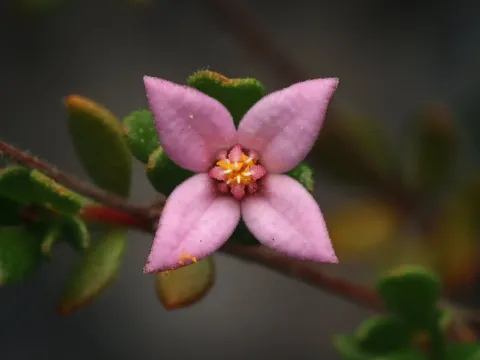
Boronia
Boronia Sm.
Boronia (Boronia Sm.) is a genus of perennial evergreen shrubs belonging to the Rutaceae family. Native primarily to Australia, these plants inhabit diverse environments ranging from open woodlands to rocky outcrops, showcasing significant botanical adaptability.
What the section contains
 Boronia anemonifolia
 A. Cunn.
Boronia anemonifolia
Boronia anemonifolia A. Cunn.
 Boronia heterophylla hybrid
Boronia heterophylla x Boronia pulchella
Boronia heterophylla hybrid
Boronia heterophylla x Boronia pulchella
 Boronia hybrid
Boronia heterophylla x Boronia megastigma
Boronia hybrid
Boronia heterophylla x Boronia megastigma
 Boronia megastigma
 Nees ex Bartl.
Boronia megastigma
Boronia megastigma Nees ex Bartl.
 Boronia pinnata
 Sm.
Boronia pinnata
Boronia pinnata Sm.
 Boronia pulchella
 Turcz.
Boronia pulchella
Boronia pulchella Turcz.
 Kalgan Boronia
Boronia heterophylla F. Muell.
Kalgan Boronia
Boronia heterophylla F. Muell.
Boronia
Successful cultivation of Boronia requires specific soil conditions. The plants thrive in well-draining, acidic, and organic-rich substrates. Poor drainage is the most common cause of failure, as the root system is highly susceptible to anaerobic conditions and subsequent rot.
Environmental requirements include providing bright, indirect sunlight. While Boronia appreciates natural light, direct exposure to intense midday sun can scorch the foliage and dehydrate the plant. Adequate airflow around the plant is essential to prevent fungal outbreaks in humid climates.
Agronomic care involves consistent irrigation with soft, low-calcium water. The soil should remain moist but never waterlogged. Regular, light pruning after the flowering season is recommended to maintain the shrub's compact shape and stimulate growth for the next season.
Commercially, Boronia is valued for its ornamental appeal and its role in the fragrance industry. Certain species, particularly Boronia megastigma, are cultivated for their highly fragrant flowers, which produce valuable essential oils used in high-end perfumery and aromatherapy.
The primary threats to Boronia health include root rot pathogens, which flourish in poorly drained soils. Symptoms include sudden wilting and discoloration of the foliage, often signaling that the root zone is already severely damaged by overwatering.
Insect pests such as spider mites and mealybugs can infest the plant, especially in low-humidity environments. Integrated pest management, including regular foliage inspection and the use of insecticidal soaps, is effective in keeping these populations under control.