
Boronia anemonifolia
Boronia anemonifolia A. Cunn.
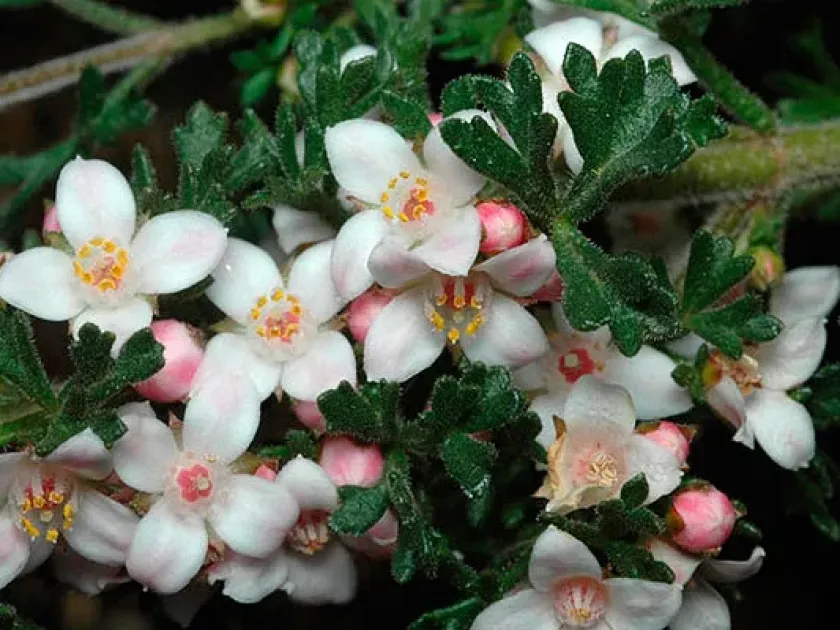
Description
Sowing dates
Propagation of Boronia anemonifolia is primarily achieved by sowing seeds during the autumn or winter months in a protected environment. Seeds often require a period of stratification to improve germination rates.
A well-draining, lightweight substrate consisting of peat and sand is ideal for sowing. Seeds should be sown on the surface with a light covering, maintaining consistent moisture levels until germination.
The optimal germination temperature ranges between 18 and 22 degrees Celsius. It is crucial to prevent waterlogging, as excessive moisture is a leading cause of seedling death due to fungal pathogens.
Pricking out the seedlings occurs when they develop two pairs of true leaves. They are transplanted into individual containers, providing enough space for the root system to develop healthily.
Cutting propagation is an effective alternative to maintain genetic consistency. Semi-hardwood cuttings are planted in the spring in a sandy peat mix under protective cover to maintain humidity.
Growing requirements
Boronia anemonifolia belongs to the Rutaceae family and is native to Australia. In its natural habitat, it thrives in well-draining, sandy, or rocky soils with slightly acidic pH levels.
This species is highly sensitive to waterlogged conditions. When cultivated in garden beds or pots, ensuring excellent drainage is mandatory to prevent root rot and ensure plant longevity.
The plant enjoys bright light but requires shade during the hottest midday hours. Direct, intense sunlight can cause leaf scorching, particularly when plants are grown in confined container environments.
Boronia does not tolerate extreme temperature fluctuations or harsh winds. In temperate climates, it is best grown as a greenhouse or indoor plant, requiring cool conditions during the winter dormancy.
Cultivation requires regular but moderate irrigation using soft or filtered water. Avoiding hard or alkaline water is essential, as the plant reacts poorly to any significant rise in soil pH.
Main diseases and pests
Root rot is the most significant threat to Boronia anemonifolia, typically occurring when irrigation practices are poorly managed or drainage is insufficient for the plant's health.
Common pests include spider mites and mealybugs. These organisms thrive in the dry air conditions often found in indoor environments during the heating season, weakening the plant quickly.
Chemical control with systemic insecticides or acaricides is possible, but caution is necessary due to the plant's sensitivity to chemical agents. Mechanical removal is recommended as a first step.
Preventative care relies on proper air circulation and maintaining high standards of hygiene for all gardening tools. Plants with strong vitality are significantly more resistant to environmental stress.
If signs of infection or pest infestation appear, immediate isolation of the affected specimen is required to prevent the spread of pathogens to other nearby ornamental plants.