
Boronia heterophylla hybrid
Boronia heterophylla x Boronia pulchella
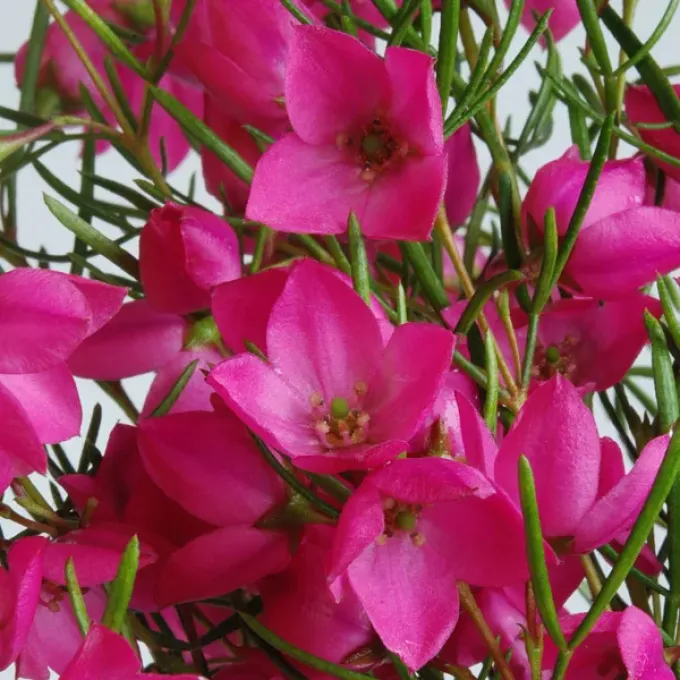
Description
Growing requirements
Boronia heterophylla hybrid is an attractive evergreen shrub belonging to the Rutaceae family. This hybrid, derived from Boronia heterophylla and Boronia pulchella, is highly regarded by gardeners for its vibrant, scented flowers and dense, aesthetic foliage.
Originating from the southwestern regions of Australia, the plant thrives in environments that offer moderate temperatures and consistent moisture levels. It is typically grown as a container plant in many regions, allowing for better control over the specific soil and climate needs.
The culture requires well-draining, slightly acidic soil. A mix of peat moss, sand, and fine bark is ideal for maintaining the necessary porosity and nutrient availability without allowing the roots to sit in excess water.
Light requirements are significant: the plant prefers bright, filtered sunlight. Exposure to harsh afternoon sun can lead to leaf scorch and dehydration, while insufficient light may result in leggy growth and reduced flowering intensity.
Consistent watering is essential, but it must be balanced carefully. The top layer of the potting medium should be allowed to dry slightly between waterings to prevent root rot, which is the most common fatal error in caring for Boronia species.
Main diseases and pests
Root rot is the primary physiological threat to the plant. It is usually caused by overwatering or poor drainage systems. Maintaining an aerated substrate and using containers with adequate drainage holes are the best preventive measures.
Spider mites are the most frequent pests, especially during periods of low humidity. They thrive in dry indoor environments and can quickly infest the plant, causing the foliage to appear speckled and eventually wither.
Mealybugs can also pose a problem by hiding in leaf axils. Regular monitoring and physical removal, or the use of appropriate systemic insecticides, are necessary to maintain plant health and prevent the spread of the infestation.
Fungal infections can occur in damp, stagnant air. To mitigate this risk, it is crucial to ensure good air circulation around the shrub and to avoid getting water directly on the flowers during evening hours.
Pruning is essential for both health and shape. Removing spent blooms and thin, weak growth prevents potential entry points for pathogens and encourages the plant to produce a denser, more vigorous canopy during the next growing season.