
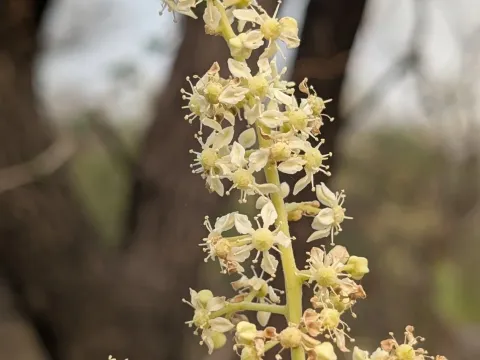
Chloroxylon
Chloroxylon
Chloroxylon swietenia is a tropical tree species belonging to the family Rutaceae. It is native to the dry deciduous forests of India and Sri Lanka, where it thrives in warm, seasonal environments.
What the section contains

Chloroxylon
The tree requires significant sunlight to develop its dense, valuable wood. It is typically found in regions with mean annual temperatures ranging from 25°C to 35°C, demonstrating excellent heat tolerance.
Regarding soil, Chloroxylon is not overly demanding. It grows effectively in well-drained, sandy, or stony soils that mimic its natural habitat on hillsides and slopes.
Agrotechnical management involves careful monitoring of young plantations to ensure that saplings are protected from excessive competition by weeds during the early developmental stages.
Water requirements are modest once the tree is established, as it is physiologically adapted to withstand prolonged dry seasons typical of the tropical monsoon climate.
The most important economic product of this species is its timber, marketed as East Indian Satinwood. It is highly sought after for its decorative grain, golden luster, and fine texture.
Satinwood is used extensively in high-end cabinet making, marquetry, and for the production of musical instruments due to its acoustic properties and aesthetic appeal.
Beyond timber, the bark of Chloroxylon is historically utilized for its medicinal properties and as a source of tannins for leather processing in traditional industries.
Harvesting strategies are focused on sustainable yield, given the slow growth rate of the tree. Careful selection of mature individuals ensures the preservation of local forestry health.
Management of these stands involves silvicultural practices that include selective thinning to promote the growth of high-quality, straight-boled trees suitable for industrial processing.