
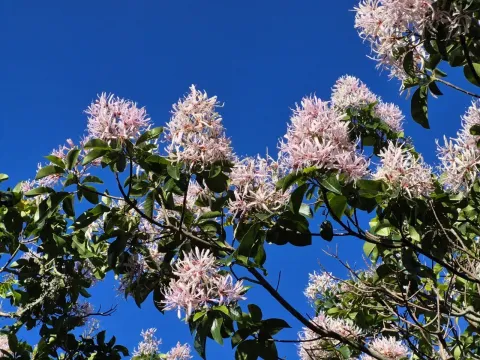
Calodendrum
Calodendrum
Calodendrum, commonly known as the Cape Chestnut, is an impressive flowering tree belonging to the Rutaceae family. It is native to the coastal forests and mountainous regions of Southern Africa, where it thrives in diverse ecological niches.
What the section contains

Calodendrum
The tree requires a sunny location and well-draining, fertile soil to reach its full growth potential. It is moderately frost-tolerant but performs best in subtropical climates with consistent warmth during the growing season.
Proper moisture management is critical; while the tree enjoys hydration, it cannot tolerate waterlogged soils, which can lead to root system decay. Mulching the base of the trunk helps in maintaining stable soil temperature and moisture levels.
Botanically, the species is recognized by its dense canopy and spectacular panicles of pink flowers. It is widely used in both forestry for its wood quality and in landscape architecture for its high aesthetic value.
Routine maintenance includes balancing nutrient levels through seasonal fertilization, focusing on nitrogen-rich compounds during the early growth stages to support lush foliage development.
Common pests affecting Calodendrum include various scale insects that adhere to the branches and leaves. These pests are effectively managed through the application of horticultural oils or systemic insecticides during the dormant season.
Root rot caused by Phytophthora species is a serious concern in poorly drained soils. Farmers must ensure proper site preparation to allow water to percolate away from the root zone to prevent these conditions.
Sooty mold growth is often a secondary issue resulting from honeydew secretion by aphids or scale insects. Improving tree ventilation through strategic pruning is an essential cultural practice to mitigate this risk.
Leaf-eating caterpillars may cause localized damage in nursery settings, requiring careful monitoring and organic control measures. Keeping the area free of weeds helps minimize the population of alternative host plants for these insects.
In mature trees, the bark is relatively resistant to mechanical injury, but pathogens can enter through deep cracks or broken branches. Regular inspections and immediate treatment of wounds help maintain the long-term health of the specimen.